-
Address
Guangdong, China -
WhatsApp
+86 135 2795 8363
 02/03/2025
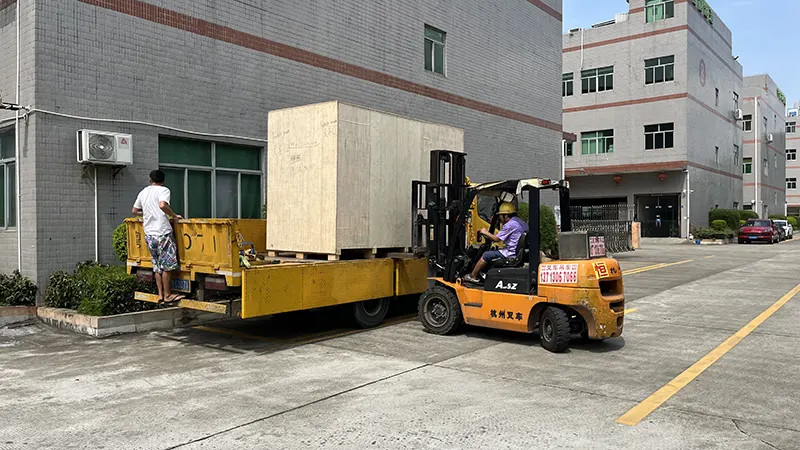
Guangdong Derui Testing Equipment Co., Ltd. supplies testing equipment for bicycle, e-bike, e-scooter and motorcycle-component projects. This company update brings together the key considerations behind a two-wheeler test system: specimen fit, measurement needs, agreed equipment scope and preparation for delivery. At a glance Start with the product, test method and measurements—not a generic machine specification. Confirm fixture interfaces, operating ranges and controls for the proposed configuration. Agree on acceptance records, delivery requirements and support responsibilities before shipment. Crated equipment being handled during dispatch preparation. From Equipment Selection to Dispatch Preparation Preparing test equipment for delivery involves more than packing a machine. The specimen, fixture arrangement, test sequence and measurement requirements must be understood alongside the destination’s site conditions and the agreed supply scope. The dispatch photograph above shows a practical part of this process: handling crated equipment outside a factory building. The image does not identify the enclosed equipment model, customer, destination or test configuration. Those details belong in the project’s approved technical and shipping records. Different Two-Wheeler Projects Need Different Test Configurations A bicycle frame, scooter stem and motorcycle component do not present the same mounting or loading problem. Likewise, structural durability testing and motor-performance measurements require different equipment and data channels. A system should be selected against a defined task rather than assumed to cover every test in a product’s compliance programme. Project focus Information to establish What to confirm in the proposal Frame and component durability Specimen drawings, mounting points, load directions and test sequence Fixture design, actuator range, control mode and stop conditions Motor or vehicle performance Operating conditions, required measurements and intended test programme Loading arrangement, measurement channels and data output Production checks Inspection steps, pass/fail limits, throughput and identification needs The checks actually included, interfaces and result records Delivery and installation Available utilities, access,…
 02/03/2025
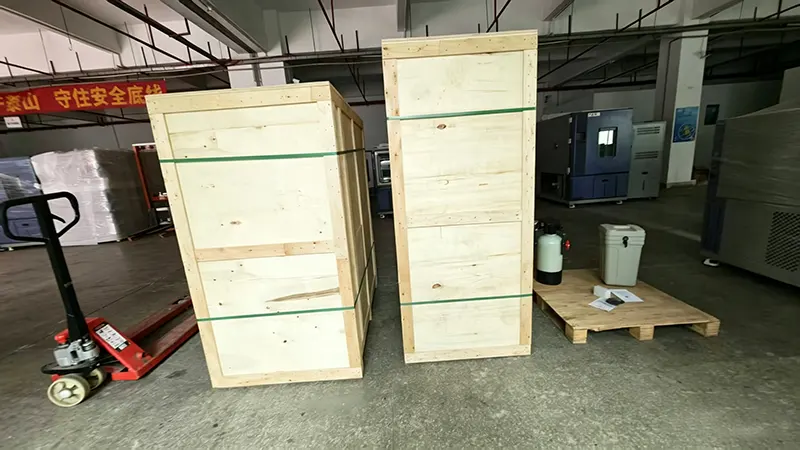
Guangdong Derui Testing Equipment Co., Ltd. has announced the export of a motorcycle wheel torsional fatigue tester for international testing applications. This company update highlights the engineering requirements behind a wheel-test project, from specimen mounting and torque loading to acceptance records and delivery preparation. Project focus Match the wheel geometry, mounting interfaces and loading arrangement to the required test method. Confirm torque range, test sequence, measurements and stop criteria for the specific configuration. Agree on verification records, operator information and installation responsibilities before delivery. Equipment shipping crates photographed during dispatch preparation. Exporting a Test System Starts with a Defined Application A motorcycle wheel testing project involves more than choosing a machine by its maximum torque. The wheel construction, hub interfaces, fixture arrangement and intended loading sequence all influence the equipment configuration and the test results that can be obtained. For overseas projects, these technical requirements also need to be considered alongside the installation site, available utilities, handling arrangements and documentation. The packing photograph above accompanies Derui’s export update; the approved project specification remains the reference for the equipment supplied. What a Wheel Torsional Fatigue Project Needs to Define Torsional fatigue testing involves repeated twisting loads applied through a defined mounting arrangement. The specified method determines how the specimen is held, how loading is applied and what is recorded. Fixture geometry and alignment are therefore part of the test definition, not simply accessories to choose after the machine is ordered. Before quotation, the customer and supplier should establish the following items for the proposed system. Engineering input Information to provide What to confirm Wheel and mounting geometry Wheel drawings, construction, hub dimensions and mounting interfaces Fixture fit, adapters, alignment and specimen clearance Loading programme Required torque profile, loading direction, cycle programme and method reference The operating range and loading sequence supported…
 02/03/2025
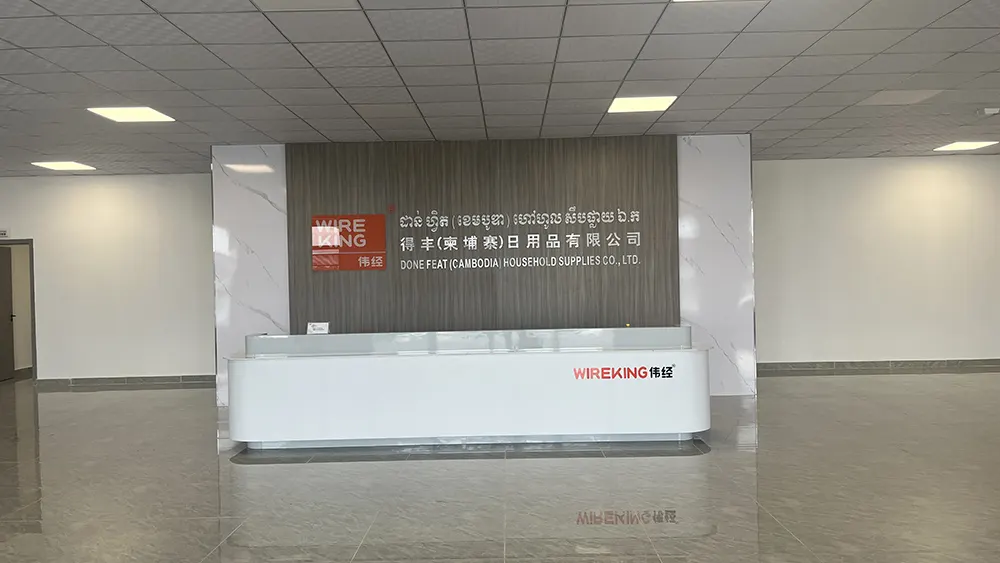
Phnom Penh / Dongguan – In a decisive stride toward deepening its international footprint, Guangdong Derui Testing Equipment Co., Ltd. (“Derui Testing”) – a premier manufacturer of physical and mechanical testing solutions based in Dongguan, China – has successfully concluded a four-day, high-intensity delivery and technical service mission in Cambodia. The project, personally led by the company’s General Manager, involved the full-scale installation, calibration, and operational handover of a comprehensive suite of precision testing instruments for De Feng (Cambodia) Daily Necessities Co., Ltd. (“De Feng Daily Necessities”), a leading local manufacturer of plastic housewares, textile products, and paper packaging. This mission marks a milestone in Derui Testing’s strategic expansion across Southeast Asia, demonstrating the company’s ability to deliver not only world-class equipment but also end-to-end, on-the-ground technical support. 🎯 Key Takeaways A Comprehensive Testing Ecosystem for Modern Manufacturing Empowering De Feng’s Quality Control Transformation Customized Solutions, Reliable Results – From Pre-Delivery to Full Operation A Company Built on Physical & Mechanical Testing Excellence A Comprehensive Testing Ecosystem for Modern Manufacturing The scope of equipment delivered covered four critical testing dimensions: material hardness, mechanical properties, environmental reliability, and material preparation analysis. Over twenty distinct types of instruments were supplied, including: Micro Vickers and Rockwell Hardness Testers Material Tensile Testing Machines Simulated Transport Vibration Tables Salt Spray Test Chambers Metallographic Sample Polishing Machines Thermal Shock Chambers Hinge Fatigue Testers Castor Durability Testers Large Dual-Wing Drop Testers Paperboard Edge Crush Testers (ECT) This diverse portfolio reflects Derui Testing’s core expertise: focused on physical and mechanical testing solutions for industries ranging from daily necessities and packaging to footwear, bicycles, e-cigarettes, robots, scooters, motorcycles, air pumps, fitness equipment, rackets, locks, motors, and beyond. Empowering De Feng’s Quality Control Transformation De Feng Daily Necessities, a prominent Cambodian manufacturer, is actively upgrading its end-to-end quality control system to meet rising domestic and export market…
 11/21/2023
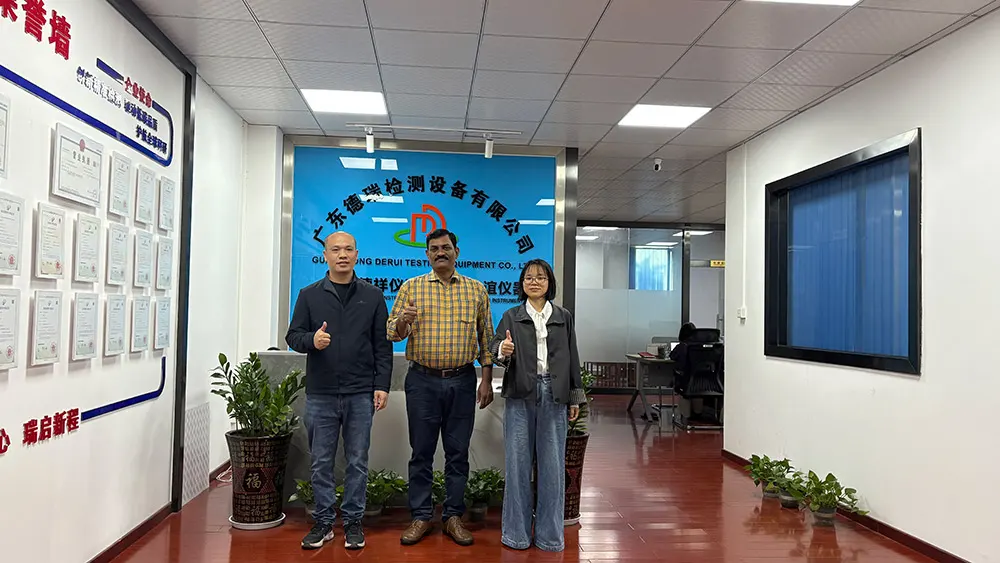
Key Challenges in the Indian Testing Equipment Market During our recent discussions with Indian clients, several critical challenges emerged that highlight the unique requirements of the Indian two-wheeler testing market. 1. Infrastructure Limitations Many Indian testing laboratories face infrastructure constraints, including limited space and inconsistent power supply. Derui’s testing equipment is designed with these challenges in mind, featuring: Compact footprint designs suitable for smaller laboratory spaces Wide voltage input range (220V ±15%) to handle power fluctuations Built-in surge protection and UPS compatibility Modular designs that can be configured for available space 2. Climate and Environmental Factors India’s diverse climate conditions present unique testing challenges: High Temperature Operation: Equipment must perform reliably in temperatures exceeding 40°C Humidity Resistance: Monsoon season brings extreme humidity levels Dust Protection: Industrial environments require robust sealing Derui addresses these through enhanced cooling systems, moisture-resistant components, and IP54-rated enclosures on critical systems. 3. Regulatory Compliance Landscape India’s evolving regulatory framework for two-wheeler safety requires: AIS (Automotive Industry Standards) compliance testing BIS (Bureau of Indian Standards) certification support Alignment with upcoming electric vehicle regulations Solutions Derui Offers for the Indian Market Customized Testing Solutions Based on our discussions, Derui has developed specific solutions for Indian clients: Challenge Derui Solution Space constraints Compact, modular testing systems Power instability Wide voltage range + built-in protection Climate adaptation Enhanced cooling, humidity resistance Budget considerations Flexible financing, local support Local Support and Service Derui is establishing a stronger presence in India to provide: Local technical support and training Faster spare parts delivery On-site installation and commissioning Regular maintenance contracts Future Collaboration Opportunities The discussions revealed significant opportunities for deeper collaboration: Joint Development: Custom testing solutions for India-specific requirements Knowledge Transfer: Training programs for Indian laboratory personnel Technology Sharing: Collaboration on new testing methodologies 💡 Key Takeaway Derui’s commitment to understanding and addressing…
 Derui chamber