-
Address
Guangdong, China -
WhatsApp
+86 135 2795 8363

09/16/2026
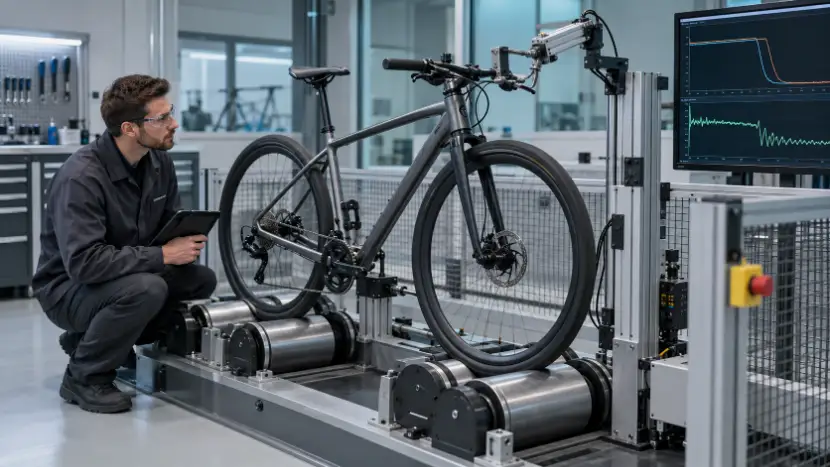
Bicycle Brake Testing Guide Bicycle Brake Testing: Procedure, Equipment and Result Review A reliable bicycle brake test connects the applicable method to a controlled specimen, repeatable operating condition, verified measurements and documented acceptance criteria. A brake test bench must control bicycle position, brake actuation, operating condition and measurement timing so results can be compared and reviewed. Key takeawayConfirm the bicycle category, target market and controlled standard edition before setting parameters. ISO 4210-2:2023 contains bicycle safety and performance requirements, while ISO 4210-4:2023 specifies braking test methods for ISO 4210-2. The laboratory must work from the licensed standard and approved product requirements rather than copied values from secondary summaries. Bicycle brake testing is more than applying a lever and observing whether the wheel slows. The result depends on product classification, specimen preparation, brake adjustment, operating condition, control of the input, measurement timing and the acceptance rule. If any of these changes between specimens, apparent product variation may actually come from the test process. This guide explains how to translate a controlled brake test method into an equipment and laboratory workflow. It deliberately does not reproduce proprietary tables, forces, speeds or acceptance values. Those details should be taken from the applicable standard edition and the approved internal test plan. In this guide Confirm scope and method Define equipment functions Prepare the bicycle Set up and verify the bench Run the controlled sequence Review results and failures Build the test record Current-edition check: ISO lists ISO 4210-4:2023 as the published braking test-method edition and ISO 4210-4:2014 as withdrawn. Verify the edition required by the target market, contract or certification programme before testing. Confirm Product Scope and the Applicable Method Identify the bicycle type, intended use, target market and any exclusions before preparing the bench. ISO 4210-2:2023 covers requirements for specified bicycle categories, while specialized…
09/16/2026
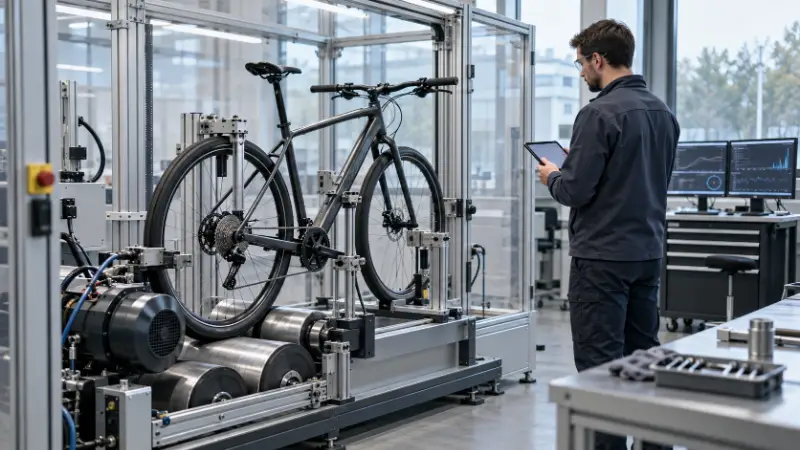
Bicycle Testing Equipment Guide Bicycle Test Bench Selection Guide: Load, Speed, Fixtures and Data Requirements A useful bicycle test bench specification begins with the decision the test must support. Define the bicycle, test method, motion, fixtures, measurements and acceptance evidence before comparing machine capacity. A bicycle test bench should reproduce the required operating or loading condition while keeping the specimen boundary conditions, measurements and pass/fail logic under control. Key takeawayA bicycle test bench is not a single machine category. The correct configuration depends on whether the project evaluates a complete bicycle, frame, fork, brake, wheel, saddle, seat post or electric drive system. A strong RFQ describes the test decision and specimen interface first, then defines load, speed, travel, control mode, data and acceptance requirements. Buyers often begin with a short request such as “We need a 5 kN bicycle test bench” or “Please quote a bicycle durability tester.” That sounds specific, but it leaves the most important engineering questions unanswered. A high load rating does not prove that the machine can mount the specimen correctly, reproduce the required motion, control the right variable or record the evidence needed by the laboratory. The term bicycle test bench may describe a roller system for complete-vehicle performance, a servo-actuated structure for frame fatigue, a brake endurance rig, an impact machine or a component-specific tester. These systems can share controls and measurement technology, but their mechanics and boundary conditions are different. Selection therefore starts with the test programme, not the supplier catalogue. In this guide Start with the test decision Define the specimen and application Specify the useful load range Define speed, travel and motion Treat fixtures as part of the test Choose controls and data channels Build a decision-ready RFQ Selection rule: Do not specify a machine by maximum capacity alone. Specify the…
 Derui chamber