Derui chamber
📋 Table of Contents
Electric Motorcycle Battery Pack Testing: EOL and Safety Protocols
The battery pack is the most expensive and most safety-critical component in any electric motorcycle. Failure modes range from reduced range to thermal runaway and fire. This guide covers end-of-line (EOL) testing and safety protocols every electric motorcycle manufacturer needs to implement.
⚡ Key Takeaway
Every electric motorcycle battery pack must pass EOL testing before shipping — but EOL testing alone isn’t enough. You need layered safety: cell-level screening, module integration testing, pack-level validation, and vehicle-level system verification. Skip any layer and you inherit catastrophic failure risk.
🔋 Key Battery Specs for Electric Motorcycles
- Typical pack voltage: 48V – 96V for entry-level; 144V – 200V for high-performance
- Cell chemistry: Lithium-ion (NMC/NCA) or LiFePO4 for applications requiring maximum thermal safety
- Typical capacity range: 1 kWh (city commuter) to 15 kWh (high-performance long-range)
- Charge rate: Standard 1C; supports up to 2C for fast-charge variants
- Operating temperature: -20°C to +55°C discharge, 0°C to +45°C charge
- BMS requirements: Cell balancing, overcurrent protection, temperature monitoring, SOC estimation
- Why Battery Pack Testing Matters
- Key Standards and Regulations
- EOL Testing Protocols
- Safety Testing Requirements
Why Battery Pack Testing Matters
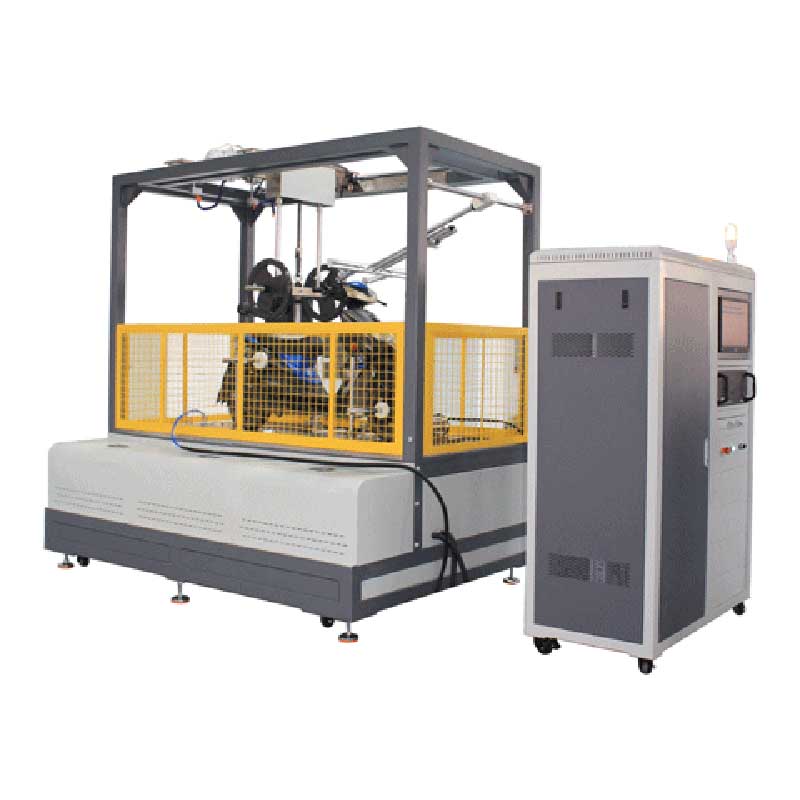
Electric Motorcycle Battery Pack Test System
Electric motorcycle battery failures are among the highest-profile incidents in the EV industry. A battery pack that catches fire during charging can destroy the vehicle, damage property, and create serious legal liability. The consequences of inadequate testing extend beyond the battery itself.
For manufacturers, battery failures create three major problems:
- Warranty costs — Battery replacement is expensive; premature pack failures erode margins
- Recall exposure — A recall of battery packs across an entire vehicle line can cost tens of millions of dollars
- Brand reputation — A single viral battery fire incident can permanently damage a brand’s market position
Robust EOL and safety testing protocols catch defects before they reach customers — reducing field failures to statistical outliers rather than systemic problems.
Key Standards and Regulations
IEC 62133 — Safety of Portable Rechargeable Cells
The foundational standard for lithium-ion battery safety. Applies to cells used in battery packs for electric motorcycles. Key tests include:
- Continuous charge at elevated temperature (5°C above maximum rated temperature, 168 hours)
- Short circuit test at room temperature and 55°C
- Free fall test (drop from 1 m onto concrete)
- Thermal abuse (rapid temperature ramp to 130°C)
- Crush test (cylinder force to 13 kN)
- Forced discharge (1C discharge for 90 minutes with external short)
UN 38.3 — Transport Testing
Required for all lithium battery shipments — including finished vehicles containing batteries. Tests include altitude simulation, thermal cycling, vibration, shock, external short circuit, and impact/crush. Must be completed before any international shipping. Tests must be conducted on representative samples from each production batch.
ECE R136 — Electric Motorcycle Type Approval (EU)
The EU regulation for electric motorcycles specifies additional battery testing requirements beyond basic cell-level testing. Includes mechanical shock, water ingress, and functional safety requirements under the EU Whole Vehicle Type Approval framework.
EOL Testing Protocols
End-of-Line testing verifies that every battery pack produced meets specification before shipment. EOL test equipment and protocols vary by manufacturer, but the following elements are universal:
Phase 1: Visual Inspection (2 min)
Every pack goes through visual inspection before electrical testing. Inspectors check for housing cracks, connector damage, label accuracy, and any signs of previous water exposure. Any pack failing visual inspection is quarantined and investigated.
Phase 2: BMS Calibration (10 min)
The BMS is programmed with factory parameters: cell chemistry, SOC estimation curves, temperature compensation, and protection thresholds. After programming, BMS self-test confirms all protection functions are active.
Phase 3: Capacity Test (3-6 hrs)
Full charge-discharge cycle at rated current to measure actual capacity. Pass: ≥ 95% of rated capacity. Packs at 90-95% are downgraded to B-grade; < 90% are rejected.
Phase 4: Hipot Test (5 sec)
Dielectric strength test at 500V DC or 1500V AC between battery terminals and pack housing. Leakage current must remain below 0.5-1 mA. Hipot failure = dangerous, must not ship.
Phase 5: Communication Verification (30 sec)
Pack connected to simulated CAN bus. BMS reports SOC, SOH, temperature, voltage, current, and fault status correctly. ECU can send charge/discharge limits and receive confirmation.
Safety Testing Requirements
Thermal Runaway Propagation Test
For high-energy-density packs (NMC/NCA), thermal runaway propagation testing is critical. Test deliberately triggers thermal runaway in one cell and observes whether failure propagates. Acceptance: fire/explosion must not propagate beyond battery compartment.
⚠️ Thermal Runaway Testing Is Not EOL — It’s Design Validation
Conducted on prototype/pre-production samples, not every production unit. Changes to cell chemistry, pack geometry, or thermal management require re-validation.
Short Circuit Protection Test
Battery packs must survive external short circuit (≤ 5 mΩ for 1 hour). BMS must disconnect within 1 ms. Pack surface temperature must not exceed 150°C.
Overcharge Test
Charge at 1.5x rated current until BMS activates. Pack must not vent, catch fire, or explode. Internal pressure relief devices must activate at specified thresholds.
Water Ingress Test
IP67 or IPX7 rating required — pack survives 30 minutes submersion at 1 meter depth. After submersion, insulation resistance must remain ≥ 1 MΩ.
Cycle Life Testing
Documentation Requirements
✅ EOL Test Report Must Include
Need Electric Motorcycle Battery Pack Testing Services?
DeRui Tester provides complete battery EOL testing, safety validation, and cycle life testing. Our CNAS-accredited lab offers IEC 62133, UN 38.3, and ECE R136 testing with certified reports for global market compliance.
Conclusion
Electric motorcycle battery pack testing is not optional — it’s the primary line of defense between your products and catastrophic field failures. A well-designed EOL testing protocol catches defects before shipment, while comprehensive safety testing validates that your battery design can survive worst-case scenarios without endangering riders.
🔗 Related Products
🔗 Related Products
📚 Related Articles
Need Professional Motorcycle Testing Equipment?
Explore our range of testing machines designed for compliance with international standards.