Derui chamber
The Global Testing Laboratory Landscape
The global testing and certification industry is undergoing a significant transformation, driven by technological advancements, regulatory changes, and evolving market demands. This transformation presents unique opportunities for China’s testing equipment sector.
Key Trends Shaping the Industry
- Automation Integration: Laboratories worldwide are adopting automated testing systems to improve efficiency and reduce human error
- Data Analytics: Advanced data collection and analysis capabilities are becoming standard requirements
- Remote Monitoring: IoT-enabled equipment allows for remote operation and diagnostics
- Sustainability Focus: Energy-efficient and environmentally friendly testing solutions are in demand
China’s Strategic Position in the Testing Equipment Market
Manufacturing Excellence
China has established itself as a global manufacturing powerhouse, and this extends to testing equipment:
- Comprehensive supply chain integration
- Cost-effective production without compromising quality
- Rapid prototyping and customization capabilities
- Large-scale production capacity
Technological Advancement
Chinese manufacturers like Derui are at the forefront of innovation:
| Innovation Area | Development Status |
|---|---|
| AI-powered testing | Active development |
| IoT integration | Commercially available |
| Cloud-based data systems | Deployed |
| Automated test sequences | Standard feature |
Opportunities for Growth and Collaboration
Emerging Markets
Several regions present significant growth opportunities:
- Southeast Asia: Rapidly growing two-wheeler market with increasing safety regulations
- India: Large market with evolving testing requirements
- Middle East: Infrastructure development driving demand
- Africa: Emerging transportation sector needs
Technology Transfer Partnerships
International partnerships offer mutual benefits:
- Knowledge exchange on testing methodologies
- Joint development of region-specific solutions
- Shared certification and compliance expertise
- Collaborative research initiatives
Derui’s Role in the Global Transformation
As a leading Chinese testing equipment manufacturer, Derui is actively participating in this transformation:
- Investing in R&D for next-generation testing systems
- Building international partnerships and distribution networks
- Adapting products to meet diverse regional standards
- Providing comprehensive training and support services
The global testing equipment market is projected to grow at 7.2% CAGR through 2030, with the Asia-Pacific region leading growth. Chinese manufacturers are well-positioned to capture significant market share.
- Just outside the window, the bustling exhibition halls were packed with attendee
- As one of the longest-standing and most influential professional events in the g
- The conversation covered key topics including the latest show developments, glob
- analytica Reaches New Scale, Building a “Complete Laboratory EcosystemR
Just outside the window, the bustling exhibition halls were packed with attendees. As one of the longest-standing and most influential professional events in the global laboratory industry, the energy of this year’s edition was evident from the moment the doors opened. The conversation covered key topics including the latest show developments, global industry trends, and China’s market positioning, offering a comprehensive view of the industry’s current trajectory and future direction.
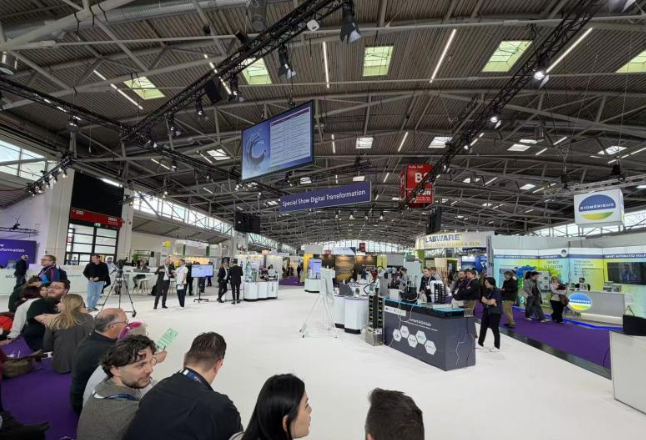
analytica Reaches New Scale, Building a “Complete Laboratory Ecosystem”
When asked by reporters, Susanne Grödl first highlighted the core data for this year’s edition: analytica 2026 attracted 1,135 exhibitors from around the world, and is expected to welcome approximately 35,000 professional visitors over the course of the event – both figures reaching five-year highs. In her view, analytica has long ceased to be a mere equipment exhibition. It has evolved into a comprehensive solutions platform built around the entire laboratory lifecycle – from basic lab furniture and consumables/chemicals to high-end analytical instruments. Whether from research institutions or industrial enterprises, procurement decision-makers can find tailored solutions covering the entire lab construction and operation process. This is the core reason why the show continues to hold strong appeal for laboratory decision-makers worldwide.
Full-Chain Completion: First-Time Coverage of the Entire Laboratory Industry Value Chain
Compared to the previous edition, the most notable change at analytica 2026 is not explosive growth in any single niche, but rather the further completion of the entire industrial chain. Most notably, three major European laboratory furniture manufacturers are exhibiting together for the first time, filling the last remaining gap in infrastructure offerings. This means that analytica now achieves full value-chain coverage – from upstream core components to downstream application scenarios, from precision analytical instruments to supporting service facilities. At the same time, exhibitor density within individual niches continues to increase; for many sub-categories, ten or even twenty-plus companies are showcasing their products side by side. This not only allows visitors to make horizontal comparisons and one-stop selections, but also transforms the show’s role from pure technology display to an industry core platform that supports procurement decisions.
She pointed out: “analytica is not just a single equipment show, but a comprehensive solutions platform around the ‘laboratory lifecycle.’ Whether you are a research institution or an industrial enterprise – if it involves laboratory construction, from equipment and furniture to chemicals and high-end analytical instruments – you can find the complete answer here.” In other words, analytica is upgrading from a “product display platform” to a “laboratory system solutions integration platform,” making it highly attractive to laboratory decision-makers.
China’s Power: From Market Participant to Global Industry Core Driver
As one of the consistently highly internationalized industry events, the share of overseas exhibitors at this analytica remains high at 65%. Among all participating countries and regions, the number of Chinese exhibitors and their total exhibition space both ranked first – surpassing the United States and even Europe’s local group exhibits. Susanne Grödl was very clear in her assessment of the Chinese market: China is no longer just an important participant in the global scientific instrument market; it is now one of the core drivers of the entire industry’s development.
It is worth noting that according to official show data, the exhibitor and visitor scale of analytica Shanghai has already ranked among the top of analytica’s global series of exhibitions.
In her view, China is not only one of the world’s largest consumer markets for scientific instruments, but local instrument manufacturers have also rapidly improved their product performance and service capabilities in recent years. Combined with the fact that China’s scientific research personnel are among the world’s best-educated, these two unique advantages continue to amplify China’s voice in the global industry: on one hand, the vast and growing demand for laboratory construction and analytical testing; on the other hand, a more flexible regulatory environment than Europe in certain areas, providing more agile ground for technological innovation. Even in the hottest area of AI technology application, Susanne Grödl stated frankly that China and the United States are the undisputed pioneers, while Europe’s industry is accelerating to catch up.
Three Core Trends: Digitalization, Sustainability, and Quality & Safety
Looking at the show’s content, the technological trends at analytica 2026 are highly concentrated and can be summarized along three main lines:
First is the continued advancement of laboratory digitalization and automation, including automated sample handling, laboratory robotics, and data connectivity and software integration between multiple instruments. The core goals are to improve experimental efficiency and data accuracy, achieve higher throughput, and drive laboratories toward intelligent evolution.
At the same time, sustainability is becoming a major topic in the European laboratory sector. Against the backdrop of rising energy costs, the industry is accelerating its green transformation – promoting energy-efficient equipment, material recycling and reuse, and optimizing green laboratory processes. This direction is occupying an increasingly prominent position across various forums and conferences.
In addition, quality control and food safety remain long-standing and stable core needs. Particularly in the German market, food testing and analysis technologies, quality control system development, and compliance and regulatory support continue to receive high attention. This field combines strong application orientation with high public visibility, serving as a key driver for the development of related analytical technologies and instruments.
From “Data Flood” to “Intelligent Decisions”: AI Reshapes the Laboratory Data Value Chain
During the interview, Susanne specifically highlighted a “must-emphasize but easily overlooked” key trend – artificial intelligence (AI). She candidly noted: “Any forum or presentation involving AI is practically full to capacity; some sessions even need to close entry early.”
She told us that the core value of AI in the laboratory setting is to convert the previously overwhelming “data flood” into “actionable data” that supports decision-making. AI not only greatly improves the efficiency of data processing and analysis, but also directly accelerates the pace of research decision-making. Especially in life sciences, where data volumes are growing exponentially, AI has become an indispensable foundational capability.
Conclusion: More Than an Exhibition – Global Laboratory Ecosystem Co-building and Future Outlook
Throughout the interview, Susanne Grödl repeatedly mentioned the transformation of analytica’s role. In her view, this decades-old exhibition has now become a core bellwether for the global laboratory industry, achieving a triple value upgrade: from a single product display platform to an integrated solutions platform; from a regional industry show to a global industry resource connector; and from a pure technology exchange venue to a definer of industry trends. In this process, China’s growing strength is also profoundly reshaping the global scientific instrument industry landscape.
Regulatory Developments Driving Change
International Standards Evolution
International testing standards are continuously evolving, requiring laboratories to update their capabilities:
- ISO Updates: ISO 4210 for bicycles has been updated with new testing requirements
- EN Standards: EN 17128 for e-scooters introduces comprehensive safety testing
- ECE Regulations: ECE R78 for motorcycle brakes requires advanced testing systems
China’s Standards Alignment
China is actively aligning its national standards with international requirements:
- GB standards are being harmonized with ISO requirements
- New electric vehicle standards are being developed
- Testing methodologies are being standardized across provinces
Investment in R&D Infrastructure
Chinese companies are significantly increasing R&D investment:
| Investment Area | Growth Rate | Key Focus |
|---|---|---|
| Testing Equipment | 15% annually | Automation, precision |
| Laboratory Facilities | 12% annually | Capacity expansion |
| Personnel Training | 20% annually | Technical expertise |
Derui’s Strategic Initiatives
To capitalize on these opportunities, Derui has launched several strategic initiatives:
- Product Innovation: Developing next-generation testing systems with AI and IoT capabilities
- Market Expansion: Establishing presence in key international markets
- Partnership Development: Collaborating with research institutions and standards bodies
- Service Enhancement: Expanding after-sales support and training programs
Conclusion
The transformation of the global laboratory industry presents unprecedented opportunities for Chinese testing equipment manufacturers. With strong manufacturing capabilities, technological innovation, and strategic market positioning, companies like Derui are well-positioned to lead this transformation and contribute to advancing vehicle safety worldwide.
Industry Statistics and Projections
Global Testing Equipment Market
The global testing equipment market continues to grow:
- Market Size 2024: $45 billion
- Projected Size 2030: $75 billion
- CAGR: 7.2%
China’s Share in the Market
China’s role in the global testing equipment market:
- Production Share: 35% of global output
- Export Value: $12 billion annually
- Growth Rate: 9% annually (outpacing global average)
Key Success Factors
For Chinese manufacturers to succeed in the global market:
- Quality Assurance: Meeting international quality standards
- Innovation: Continuous product development
- Service: Comprehensive after-sales support
- Localization: Adapting to regional requirements
Derui embodies all these factors, positioning us as a leader in the global testing equipment transformation.