Derui chamber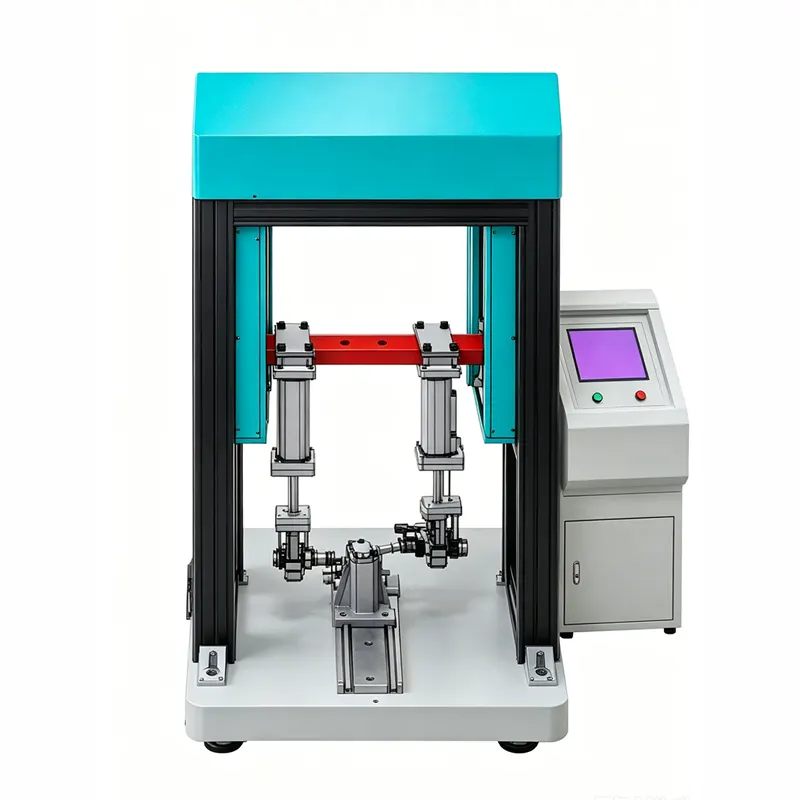

 Message
Bicycle Saddle Fatigue Testing Machine ISO 4210 Compliant
This page provides a detailed overview of the Bicycle Saddle Fatigue ISO 4210 Compliant — including features, specifications, test standards, and applications.
⚡ Key Takeaway
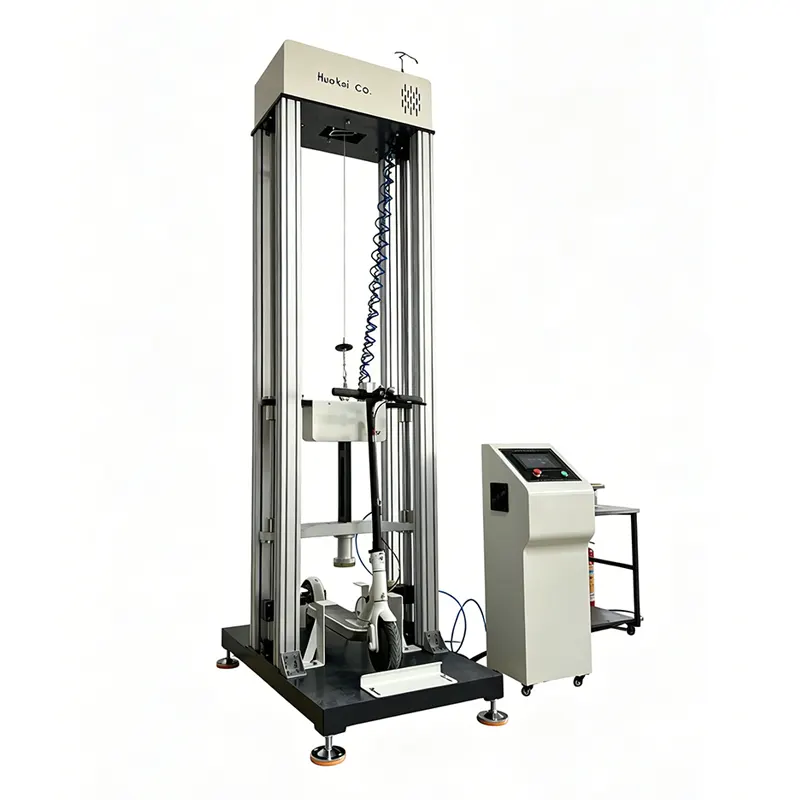
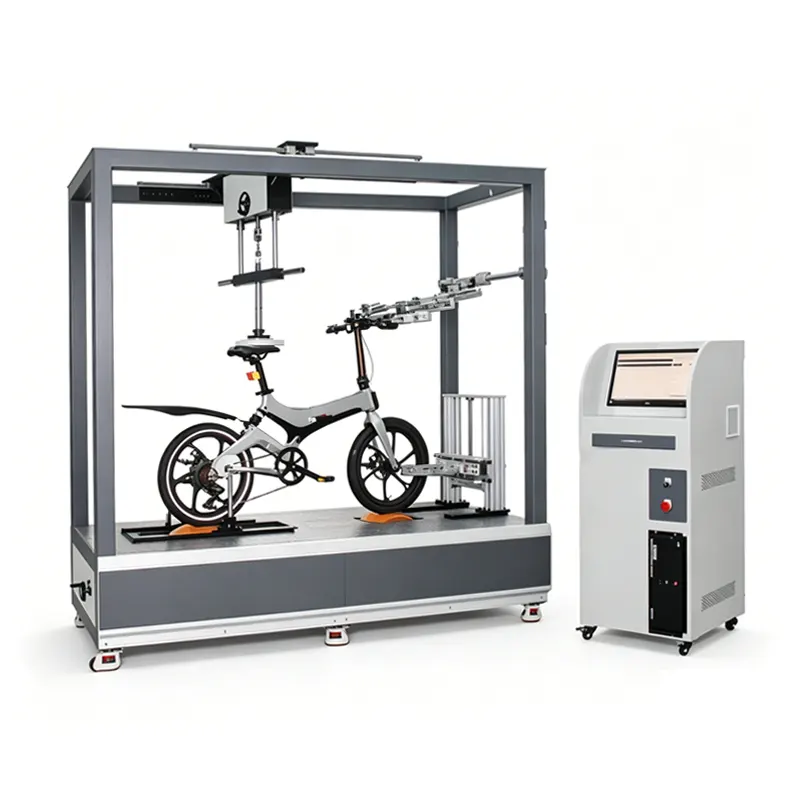
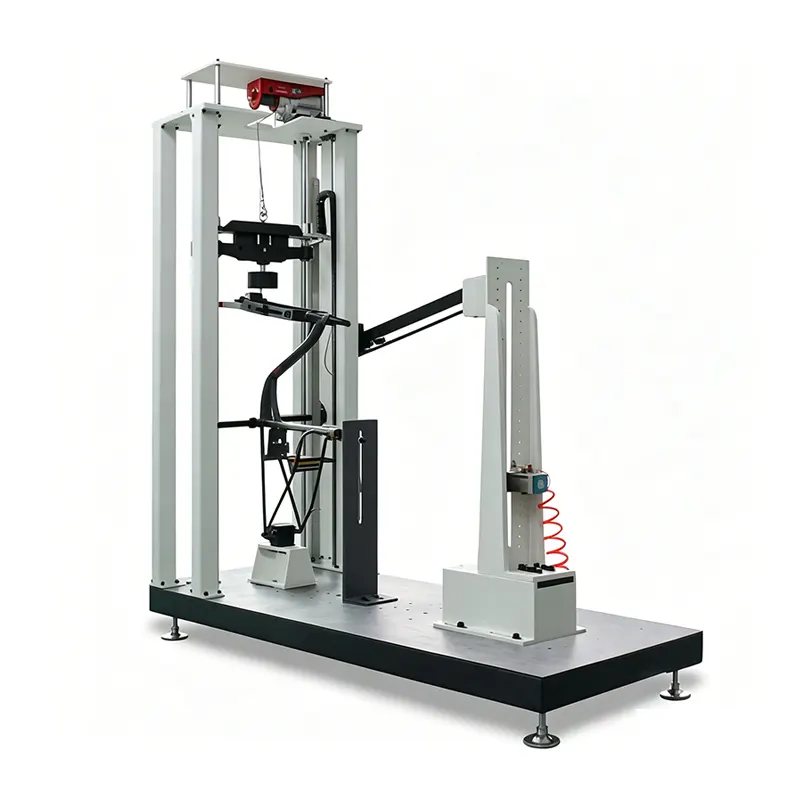
This Bicycle Saddle Fatigue Testing Machine ISO 4210 Compliant is designed for professional laboratory and production line testing. It ensures compliance with international standards and delivers reliable, repeatable test results for quality control and certification.
📋 Table of Contents
- Core Testing Capabilities and Versatility
- Technical Specs: Precision Performance of Our Bicycle Saddle Fatigue Testing Machine
- Compliance Standards for Your Bicycle Saddle Fatigue Testing Machine
- Smart Control Systems for the Bicycle Saddle Fatigue Testing Machine
- Heavy-Duty Build of our Bicycle Saddle Fatigue Testing Machine
- Why Partner with Derui for Your Bicycle Saddle Fatigue Testing Machine?
- FAQ: Mastering Your Bicycle Saddle Fatigue Testing Machine
- Core Testing Capabilities and Versatility
- Compliance Standards for Your Bicycle Saddle Fatigue Testing Machine
- Smart Control Systems for the Bicycle Saddle Fatigue Testing Machine
- Heavy-Duty Build of our Bicycle Saddle Fatigue Testing Machine
Core Testing Capabilities and Versatility
In the competitive landscape of bicycle manufacturing, equipment precision and strict compliance are non-negotiable. I have designed our Bicycle Saddle Fatigue Testing Machine to address the industry’s most pressing concerns: ensuring rider safety while maintaining structural integrity over time. By integrating both dynamic and static testing into a single, high-rigidity platform, we eliminate the guesswork from your quality control process.
Dynamic Fatigue Testing
Our system specializes in long-term cyclic loading simulations, crucial for identifying material fatigue before a product reaches the consumer.
- Cycle Capacity: Capable of executing 200,000+ cycles without deviation.
- Real-World Simulation: Mimics the repetitive stress encountered during high-intensity riding.
- Predictive Analysis: Identifies stress points in seat rails and pillar junctions under continuous vibration.
Static Strength Testing
To ensure your components can withstand extreme impacts, our hardware performs rigorous static strength evaluations.
- Peak Load Thresholds: Determines the maximum force required to cause structural failure.
- Deformation Tracking: Monitors how materials like aluminum or carbon fiber react under sudden, heavy loads.
- Safety Certification Support: Provides the empirical data needed for global safety standards.
Multi-Component Compatibility
We recognize that modern bicycle designs vary significantly. Our saddle durability testing rig features a highly adjustable interface to accommodate a wide range of specifications:
- Diverse Materials: Optimized for testing Carbon fiber, Titanium, and Chromoly rails without surface damage.
- Adjustable Fixtures: Fits various seat pillar diameters and unconventional saddle shapes.
- Universal Mounting: Ensures zero-slip testing for both standard and proprietary seat post designs.
| Feature | Capability |
|---|---|
| Max Cycles | 200,000+ |
| Test Types | Dynamic Fatigue & Static Strength |
| Materials | Carbon, Ti, Alloy, Steel |
| Compliance | ISO 4210-9 Ready |
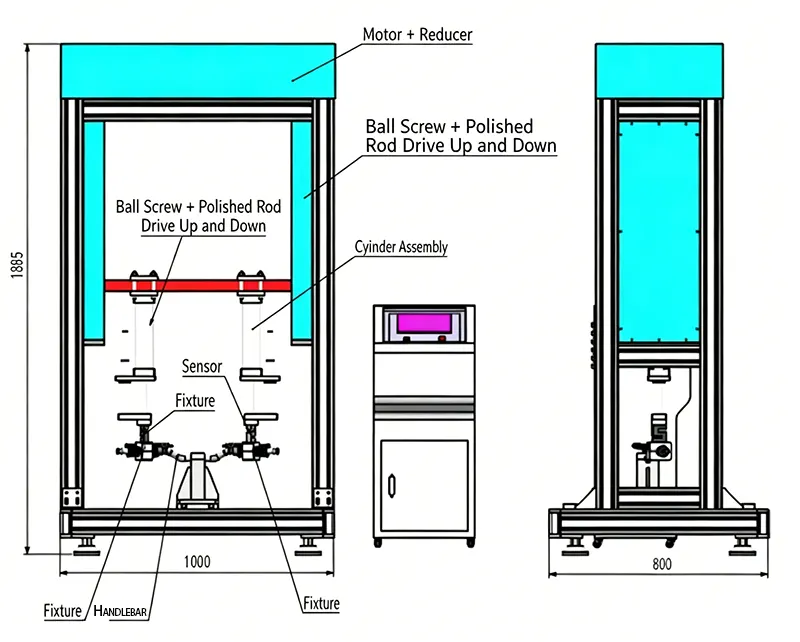
Technical Specs: Precision Performance of Our Bicycle Saddle Fatigue Testing Machine
We’ve engineered this cyclic load testing machine to deliver pinpoint accuracy where it matters most. When you’re running high-volume durability trials, “close enough” doesn’t cut it. Our system utilizes high-sensitivity load cells to ensure every ounce of pressure is accounted for, providing the data integrity needed for global safety certifications.
Core Performance Metrics
| Feature | Specification Detail |
|---|---|
| Force Precision | High-sensitivity load cells with ±1% accuracy |
| Frequency Range | Adjustable from 0.5Hz to 5Hz |
| Drive System | High-performance servo-pneumatic or hydraulic actuation |
| Stroke Control | Fully customizable displacement for real-world simulation |
High-Frequency Fatigue Simulation & Drive Power
Consistency is the backbone of our bicycle saddle fatigue testing machine. We use a servo-pneumatic drive system to maintain steady force application even during long-duration runs. This setup allows us to hit the sweet spot of high-frequency fatigue simulation, ensuring the seat rails and pillar interfaces are stressed exactly as they would be on a rough trail or city street.
- Customizable Stroke: We don’t believe in “one size fits all.” You can adjust the displacement to mimic specific vibration patterns or extreme impact scenarios.
- Steady Force Delivery: Whether you are running at 0.5Hz or pushing the limits at 5Hz, the output remains stable to prevent data drift.
- Reliable Hardware: This mechanical strength testing machine is built to run 24/7, providing the repeatability required for rigorous R&D and quality control.
Compliance Standards for Your Bicycle Saddle Fatigue Testing Machine
I’ve engineered our Bicycle Saddle Fatigue Testing Machine to ensure every product you ship meets the rigorous demands of global safety regulators. We don’t just hit the minimums; we provide the precision needed for official bicycle safety certification hardware.
Meeting ISO and EN Safety Requirements
Navigating international markets requires hardware that speaks the language of local regulators. Our machine is pre-configured to handle the most critical bike component fatigue analysis benchmarks:
- ISO 4210-9 Compliance: Dedicated testing cycles for saddle and seat pillar safety, ensuring long-term structural integrity under cyclic stress.
- EN 14764 & EN 14766: Fully aligned with European standards for city, trekking, and high-performance mountain bikes.
- Custom Test Protocols: I’ve integrated the ability to program proprietary manufacturer standards, allowing you to push your R&D beyond standard baseline regulations.
| Standard | Application | Key Focus |
|---|---|---|
| ISO 4210-9 | Global Safety | Saddle & Seat Pillar Strength |
| EN 14764 | City/Trekking | Durability for Daily Commuting |
| EN 14766 | Mountain Bikes | High-Impact Fatigue Resistance |
Beyond the Baseline
I know that “standard” isn’t always enough for top-tier brands. That’s why our cyclic load testing machine allows for customized stress intervals. You can simulate extreme real-world conditions that exceed current EN 14764 testing standards, giving you a competitive edge in product reliability and consumer trust.
Smart Control Systems for the Bicycle Saddle Fatigue Testing Machine
We have integrated a high-end PLC-controlled bicycle tester interface into our machine to ensure the user experience is as smooth as the hardware performance. You get full control over your bike component fatigue analysis through a responsive, high-definition touchscreen that visualizes data in real-time.
Automated “Set and Forget” Operation
Time is money in any laboratory. Our automated fault detection system allows for true “set and forget” operation, so your team can focus on other tasks while the test runs.
- Instant Shut-off: The machine automatically stops the moment it detects a structural failure or a drop in resistance.
- Safety Monitoring: Sensors provide a reliable bike component fatigue analysis by tracking every cycle without needing constant supervision.
- Precision Tracking: It records exactly when and how the failure occurred, providing the precise data needed for bicycle safety certification hardware reports.
Professional Data Management & Export
We’ve simplified the path to compliance. Our system handles all the heavy lifting for data logging to ensure your records are audit-ready.
| Feature | Benefit |
|---|---|
| Real-Time Visualization | Monitor force curves and cycle counts instantly on the screen. |
| Universal Export | Generate CSV or PDF reports with one click for easy sharing. |
| Automated Logging | Eliminates manual entry mistakes, ensuring 100% data integrity. |
This advanced interface makes the Bicycle Saddle Fatigue Testing Machine not just a piece of hardware, but a complete data solution for modern cycling R&D.
Heavy-Duty Build of our Bicycle Saddle Fatigue Testing Machine
A Bicycle Saddle Fatigue Testing Machine is only as good as its frame. If the rig vibrates or flexes during a run, your data is effectively useless. We’ve engineered our testers with a focus on structural integrity and long-term reliability to meet the highest demands of laboratory testing for bike saddles.
Rugged Engineering and Operator Safety
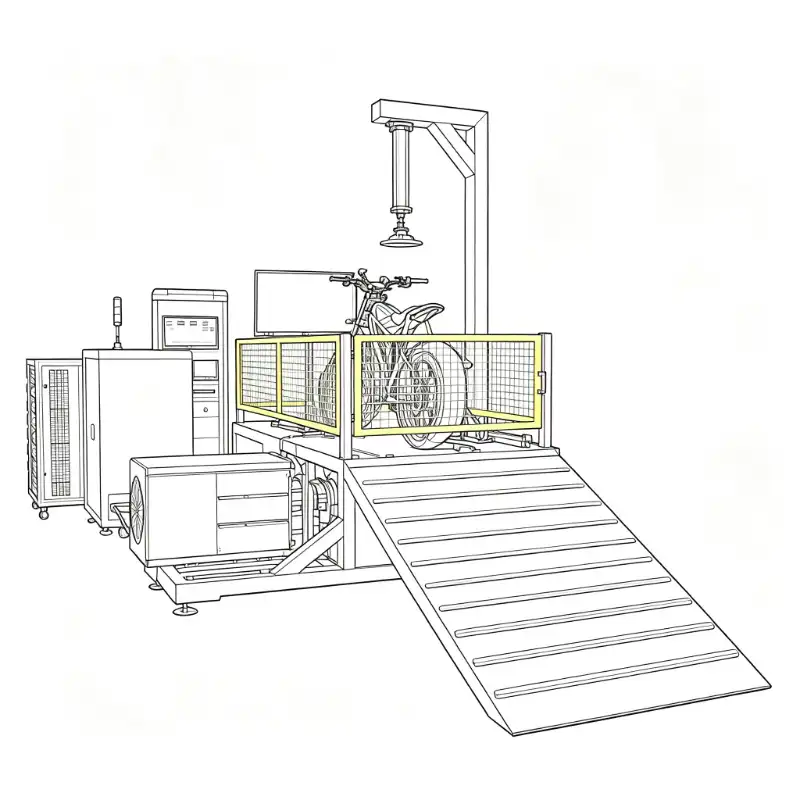
- High-Rigidity Steel Frame: We use a heavy-duty, reinforced steel structure to eliminate machine resonance. This ensures that every bit of force is directed exactly where it needs to go, providing a true mechanical strength testing machine experience without measurement noise.
- Hardened Precision Fixtures: Our bicycle seat pillar tester setup includes custom-machined, hardened steel clamps. These are designed for a zero-slip grip, ensuring the seat post stays perfectly positioned even through 200,000+ cycles of high-load testing.
- Integrated Safety Protocols: Keeping your team safe is our priority. Our machines feature:
- Protective Shielding: High-impact barriers to contain any material fragments during a structural failure.
- Emergency Stops: Strategically placed E-stop buttons for immediate manual intervention.
- Fault Detection: The system automatically shuts down if it detects a specimen break or a deviation from the set parameters.
This robust design makes our hardware the most dependable choice for consistent bike component fatigue analysis in professional testing environments.
Why Partner with Derui for Your Bicycle Saddle Fatigue Testing Machine?
When you invest in a Bicycle Saddle Fatigue Testing Machine, you aren’t just buying equipment; you’re securing the reliability of your brand. We focus on delivering high-performance bicycle safety certification hardware that integrates seamlessly into your workflow.
Tailored Solutions and Global Support
We understand that every testing facility has unique requirements. Our approach is built around flexibility and long-term precision:
- Custom Laboratory Layouts: We offer modular customization options to ensure your bicycle seat pillar tester fits perfectly within your specific floor plan and utility setup.
- Expert Global Support: From initial installation to routine mechanical strength testing machine calibration, our technical team provides worldwide assistance to minimize downtime.
- Dedicated R&D: We continuously reinvest in the cycling industry, ensuring our rigs stay ahead of evolving material trends like ultra-light carbon and 3D-printed rails.
- Compliance Ready: Our systems are designed to make laboratory testing for bike saddles straightforward, helping you meet international standards without the headache.
Comparison of Our Service Value
| Feature | Our Commitment | Impact on Your Lab |
|---|---|---|
| Customization | Tailored hardware configurations | Maximizes space and operator efficiency |
| Calibration | Certified global onsite services | Ensures ongoing data accuracy for ISO audits |
| Technical Support | Direct access to engineers | Faster troubleshooting and hardware updates |
By choosing Derui, you are partnering with a team that values the precision of your bicycle saddle fatigue testing machine as much as you do. We provide the tools you need to push bike components to their limits with total confidence.
FAQ: Mastering Your Bicycle Saddle Fatigue Testing Machine
We know that keeping a lab running smoothly means getting straight answers to technical questions. Here is what you need to know about operating our Bicycle Saddle Fatigue Testing Machine and staying compliant with global standards.
What is the standard cycle count for ISO 4210 saddle testing?
For most applications under ISO 4210-9, the benchmark for fatigue life is 200,000 cycles. Our ISO 4210 cycle testing equipment is designed to run these high-volume tests autonomously. Whether you are testing city, trekking, or mountain bike saddles, the machine maintains constant force levels to ensure the integrity of your bike component fatigue analysis.
Can this machine test carbon fiber seat posts without damaging the surface?
Yes. We have engineered our bicycle seat pillar tester with high-precision fixtures that prioritize both grip and material safety.
- Zero-Slip Clamping: The hardened steel fixtures provide a secure hold without requiring “crushing” force that would mar a finish.
- Material Versatility: You can swap fixtures to accommodate different seat rail fatigue life testing needs, ensuring carbon fiber, titanium, and alloy components are tested under realistic conditions without surface scarring.
How often does the load cell require calibration?
To maintain the highest level of mechanical strength testing accuracy, we recommend calibrating the load cells once every 12 months.
- Precision Guardrail: Annual calibration ensures your servo-pneumatic fatigue tester stays within the ±1% precision range.
- Audit Readiness: Regular calibration is essential for any facility using bicycle safety certification hardware to pass international quality audits and maintain certification status.
Why is real-time data logging important for these tests?
Our PLC-controlled bicycle tester doesn’t just run the test; it captures the “how” and “why” behind a failure.
- Failure Analysis: If a saddle rail snaps at cycle 150,000, the data log shows the exact force fluctuations leading up to the break.
- Export Ready: You can pull a CSV or PDF report immediately for your R&D team or for final certification filing.
Need This Equipment?
Derui Tester manufactures this equipment with full compliance to international standards. Contact us for a quote or technical consultation.