Derui chamber
📋 Table of Contents
ISO 4210:2025 Update – What’s New for Bicycle Frame Fatigue Testing?
ISO 4210 is the foundational safety standard for bicycles. The 2025 update introduces important changes to frame fatigue testing requirements, especially for e-bikes and carbon fiber frames. This guide explains what’s new and how manufacturers need to adapt their testing protocols.
⚡ Key Takeaway
The ISO 4210:2025 update strengthens fatigue testing requirements for e-bike frames and carbon fiber composites. Frame stiffness degradation limits are tighter, and new provisions cover integrated motor/battery loads. Manufacturers using ISO 4210-compliant test equipment should verify their machines meet the 2025 parameters.
- ISO 4210 Bicycle Safety
- ISO 4210:2025 Update – Frame Fatigue Testing
- Test Methods and Equipment
- Compliance and Certification
ISO 4210 Bicycle Safety
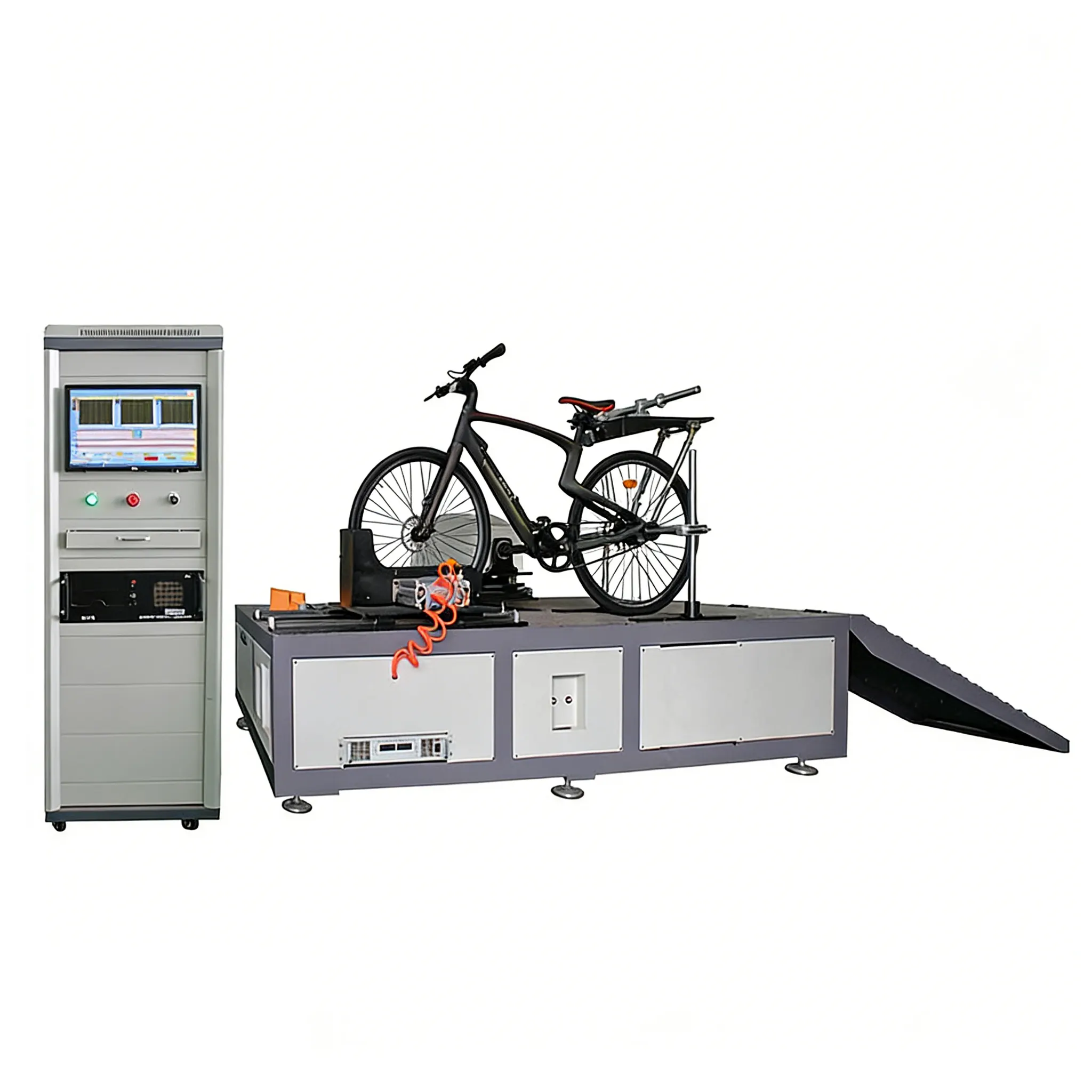
Simulated Cycling Test Bench for Bicycle Durability Testing
When I validate a bicycle frame, I start with ISO 4210 because it sets the baseline for bicycle safety. It defines how I check whether a frame can survive real use without cracking, loosening, or losing stiffness.
ISO 4210 Parts 2, 3, and 6
- Part 2: City and trekking-style bikes
- Part 3: Mountain bikes
- Part 6: Racing bikes
Each part sets the test scope for its bike class, so I can match bicycle frame fatigue test ISO 4210 conditions to the intended rider and load profile.
Fatigue Testing Purpose
I use fatigue testing to simulate:
- Pedaling forces
- Vertical impacts
- Repeated frame flex
- Real-world riding stress over time
This is the core of bicycle durability testing standards and a key part of rider safety frame endurance testing.
Why Frame Fatigue Matters
Fatigue performance is critical for:
- Carbon fiber frames, where small stiffness losses can grow into damage
- High-torque e-bike frames, where motor assist increases load cycles and stress peaks
For me, carbon fiber frame stiffness degradation and ISO 4210 compliance e-bike frames are not optional concerns — they are design and safety priorities.
ISO 4210:2025 Update – Frame Fatigue Testing
The 2025 update introduces several important changes that affect how frame fatigue testing is conducted. These changes reflect the evolving bicycle market, particularly the rapid growth of e-bikes and high-performance carbon fiber frames.
What’s New in ISO 4210:2025?
⚠️ Important: Stiffness Degradation Measurement Is Now Mandatory
Previous versions of ISO 4210 only required visual inspection for cracks. The 2025 update requires measuring frame stiffness (K = F/δ) at regular intervals during the fatigue test. If stiffness drops by more than 10% from the baseline, the frame fails — even if no crack is visible. This is particularly important for carbon fiber frames, where internal delamination can occur without visible external damage.
Updated Test Parameters by Bicycle Type
🔧 Updated Test Parameters
- City/Trekking (Part 2): 100,000 cycles, 1,200 N vertical load, stiffness monitoring every 25,000 cycles
- Mountain Bike (Part 3): 150,000 cycles, 1,500 N vertical load, stiffness monitoring every 25,000 cycles
- Racing Bike (Part 6): 100,000 cycles, 1,000 N vertical load, stiffness monitoring every 20,000 cycles
- E-Bike (all types): 200,000 cycles, 1,500 N vertical load + simulated motor torque, stiffness monitoring every 25,000 cycles
Impact on Testing Equipment
If you already own ISO 4210-compliant test equipment, you may need to upgrade:
✅ Equipment Upgrade Checklist for ISO 4210:2025
Test Methods and Equipment
Vertical Fatigue Test (ISO 4210-6)
The vertical fatigue test applies a repetitive downward force to the frame’s seat post area while the bottom bracket is supported. This simulates the repeated loading from a rider pedaling over bumps and rough terrain.
Test Setup:
- Frame mounted at bottom bracket and rear dropout
- Load applied at seat post at 4 Hz (or as specified)
- Load range: 400 N – 1,500 N (depending on bike type)
- Stiffness measured every 25,000 cycles
Horizontal Fatigue Test (ISO 4210-6)
The horizontal fatigue test applies a repetitive horizontal force to the handlebars/fork area. This simulates the forces from steering, braking, and front-wheel impacts.
Test Setup:
- Fork mounted at dropout and crown
- Load applied at handlebar stem at 4 Hz
- Load range: 300 N – 800 N (depending on bike type)
- Stiffness measured every 25,000 cycles
Impact Testing (ISO 4210-7)
Impact testing uses a free-falling weight to simulate a sudden bump or crash. The 2025 update does not change impact testing parameters, but it does add a requirement to measure frame stiffness after the impact test.
Compliance and Certification
When Does ISO 4210:2025 Become Mandatory?
ISO standards typically have a transition period of 1-2 years after publication. During this period, both the old and new versions are valid. Check with your certification body or market surveillance authority for the exact timeline in your region.
Testing Pathways
Need ISO 4210:2025 Compliant Testing Equipment?
DeRui Tester manufactures bicycle frame fatigue test machines that meet ISO 4210:2025 requirements, including stiffness measurement, e-bike simulation, and high-cycle capability. CNAS-accredited lab testing services also available.
Conclusion
The ISO 4210:2025 update reflects the evolving bicycle industry — particularly the growth of e-bikes and high-performance carbon fiber frames. The new stiffness degradation requirement is a significant change that will catch many manufacturers off guard if they are not prepared.
Investing in upgraded testing equipment now ensures your frames will pass certification under both the current and future versions of ISO 4210. It also demonstrates a commitment to rider safety that goes beyond minimum compliance.
🔗 Related Products
🔗 Related Products
📚 Related Articles
Need Professional Bicycle Testing Equipment?
Explore our range of testing machines designed for compliance with international standards.
Key Changes in ISO 4210:2025 Compared to the 2014 Edition
The 2025 revision of ISO 4210 introduces several significant changes that affect how bicycle frame fatigue testing is conducted and interpreted. Understanding these changes is essential for manufacturers transitioning from the 2014 edition.
Carbon Fiber Frame Testing Considerations
The 2025 revision introduces specific requirements for carbon fiber reinforced polymer (CFRP) frames that did not exist in the 2014 edition. These changes reflect the growing market share of carbon frames and the unique failure modes associated with composite materials.
Environmental Preconditioning
Before fatigue testing, CFRP frames must undergo environmental preconditioning to simulate real-world aging. The standard specifies:
- UV exposure: 500 hours of UV-A radiation at 0.76 W/m² at 340nm, following the cycle defined in ISO 4892-3. This simulates approximately 2 years of outdoor exposure in a temperate climate.
- Humidity cycling: 20 cycles between 20% and 95% relative humidity at 40°C, with 12-hour dwell times at each extreme. This tests the hygroscopic behavior of the resin matrix.
- Thermal cycling: 50 cycles between -20°C and +60°C with 1-hour dwells, simulating seasonal temperature variation. This is particularly important for frames with metal inserts bonded into carbon tubes.
⚠️ Critical Note: Frames that pass fatigue testing without environmental preconditioning may fail catastrophically after UV and humidity exposure. The resin matrix in CFRP degrades significantly under UV radiation, reducing interlaminar shear strength by 15–30% after the specified exposure period. Always test in the preconditioned state for compliance with the 2025 standard.
Transition Timeline and Compliance Strategy
The transition from ISO 4210:2014 to the 2025 edition requires careful planning. Most certification bodies allow a 24-month coexistence period during which both editions are accepted for new certifications. However, manufacturers should begin transitioning immediately for the following reasons:
- Market expectations: Major retailers and distributors in the EU are already requesting 2025-compliant test reports for new product listings, even during the transition period. Being early signals quality leadership.
- Design lead time: The new carbon fiber preconditioning requirements add 4–6 weeks to the testing timeline. Products designed to the 2014 standard may need design modifications to pass the 2025 tests, requiring additional prototype iterations.
- Cost of re-certification: If a product certified to the 2014 standard fails the 2025 requirements, the cost of design changes plus re-certification can exceed the cost of designing to the 2025 standard from the start.
Recommended action plan: Audit your current product line against the 2025 requirements immediately. Identify any gaps (particularly in e-bike frame fatigue loads and carbon fiber preconditioning) and prioritize updates for products with the longest remaining market life. New products should be designed directly to the 2025 standard to avoid future re-certification costs.