Derui chamber
Bicycle wheel hub leak detection is one of the most critical quality control processes in modern bicycle manufacturing. A hub that fails to maintain air tightness can lead to premature bearing failure, corrosion, and catastrophic wheel malfunction during riding. This comprehensive guide explores the methods, standards, and equipment used for bicycle hub leak detection, providing manufacturers and testing laboratories with the technical knowledge needed to ensure product safety and compliance.
Key Takeaways
- ISO 4210 and EN 14766 standards define mandatory test procedures, impact energy levels, and fatigue cycle requirements for bicycle frames and components.
- Accurate fixture alignment and load cell calibration are critical — misalignments of just 2-3 mm can introduce 15-20% measurement errors in fatigue testing results.
- Each component (frame, fork, saddle, brake) has distinct test parameters: frame fatigue requires 50,000-100,000 cycles while brake testing demands higher force thresholds.
- Data acquisition sampling rates of 10 kHz or higher are necessary to capture transient impact events without losing peak force data.
- Regular equipment calibration (every 6-12 months) and documented calibration certificates are essential for ISO-accredited lab compliance.
📑 Table of Contents
Why Hub Leak Detection Matters
The bicycle wheel hub is the central rotating component that connects the wheel to the frame via the axle. Inside the hub shell, precision bearings operate in a sealed environment protected by rubber seals, dust caps, and sometimes grease barriers. When any of these sealing elements fail, contaminants such as water, dust, and road debris enter the bearing cavity, leading to accelerated wear, increased rolling resistance, and potential seizure during operation.
According to industry warranty data, approximately 15-20% of all bicycle hub failures are directly attributable to seal integrity issues. For electric bicycles operating at higher speeds and carrying greater loads, this failure rate can increase to 25-30% because the elevated rotational speeds generate more heat and centrifugal force that stress seal interfaces. The consequences range from annoying noise and reduced efficiency to complete bearing lockup that can cause loss of control at speed.
Beyond safety concerns, hub leak detection plays a crucial role in manufacturing quality assurance. A robust leak testing program helps manufacturers identify production defects early—before hubs are laced into wheels and shipped to customers. The cost of detecting a defective hub at the component level is roughly 1/50th the cost of a warranty claim for a complete wheel replacement, making leak detection an economically compelling investment.
Key Standards for Bicycle Hub Seal Testing
Several international standards govern the testing of bicycle hub sealing performance. Understanding these standards is essential for manufacturers who need to certify their products for global markets.
ISO 4210-8 is the most widely referenced standard for bicycle hub testing. It specifies that hubs must maintain seal integrity when subjected to a water spray test that simulates riding in heavy rain for a minimum of 30 minutes. The test requires that after exposure, the hub’s rotational torque must not increase by more than 50% compared to the pre-test baseline, and no visible water ingress should be detectable inside the bearing cavity upon disassembly inspection.
For manufacturers targeting the Japanese market, JIS D 9401 adds an additional requirement: hubs must pass a pressurized water immersion test at 0.05 MPa for 5 minutes without any detectable leakage. This is more stringent than the ISO spray test and requires dedicated pressure testing equipment rather than simple spray apparatus.
Leak Detection Methods Compared
Modern bicycle hub leak detection employs several distinct methodologies, each with different sensitivity levels, throughput rates, and equipment costs. Selecting the right method depends on the production volume, required detection sensitivity, and budget constraints.
For most bicycle manufacturers, pressure decay testing offers the best balance of sensitivity, speed, and cost. It can detect leaks as small as 10⁻³ mbar·L/s, which corresponds to a pinhole approximately 5 micrometers in diameter—far smaller than any defect that would allow water ingress under normal riding conditions. The cycle time of 15-30 seconds per hub makes it suitable for production lines outputting 100-200 hubs per hour.
Pressure Decay Testing: Technical Deep Dive
Pressure decay testing is the workhorse of bicycle hub leak detection. The principle is straightforward: the hub’s internal cavity is pressurized with clean, dry air to a predetermined test pressure, then isolated from the pressure source. Any leak in the hub’s sealing system will cause the internal pressure to decay over time, and this decay rate is measured with high-precision transducers to determine leak rate.
Test Parameters and Setup
The test pressure for bicycle hub leak detection typically ranges from 0.1 to 0.5 MPa (1-5 bar), depending on the hub design and the standard being followed. Higher test pressures increase the pressure differential across seals, making leaks easier to detect, but they also risk damaging seals that are not designed for internal pressurization. Most manufacturers use 0.2 MPa as a standard test pressure, which provides adequate sensitivity without overstressing the seal components.
The measurement phase consists of four distinct stages: (1) Fill phase—pressurizing the hub cavity to the target pressure, typically 3-5 seconds; (2) Stabilization phase—allowing the air temperature and pressure to equilibrate after the adiabatic heating caused by compression, typically 5-10 seconds; (3) Measurement phase—monitoring pressure decay over a defined period, typically 10-15 seconds; (4) Vent phase—releasing the test pressure, typically 2-3 seconds. The total cycle time is therefore approximately 20-33 seconds per hub.
Temperature compensation is critical for accurate pressure decay measurements. A 1°C temperature change in the test volume causes a pressure change of approximately 0.34% at 0.2 MPa, which can easily be mistaken for a leak signal. Modern testers use either reference volume comparison (measuring the pressure difference between the test part and a sealed reference volume) or mathematical temperature compensation algorithms to eliminate this source of error.
Accept/Reject Criteria
The pass/fail threshold for bicycle hub leak testing must be set based on the functional requirements of the seal system. For standard bicycle hubs, a maximum allowable leak rate of 0.5 Pa/s at 0.2 MPa test pressure is commonly used. This corresponds to a theoretical orifice diameter of approximately 8 micrometers, which is well below the size that would allow liquid water penetration under normal hydrostatic pressure conditions.
For e-bike hubs that operate at higher speeds and temperatures, the threshold is typically tightened to 0.2 Pa/s. The elevated operating temperatures cause thermal expansion of seal materials, which can open micro-gaps that would be sealed at room temperature. Testing at both ambient and elevated temperatures (60-80°C) provides the most reliable assessment of real-world seal performance.
Helium Mass Spectrometry for Precision Detection
When the highest possible detection sensitivity is required—such as for premium hubs with ceramic bearings that must maintain pristine internal conditions—helium mass spectrometry leak detection is the gold standard. This method can detect leaks as small as 10⁻⁹ mbar·L/s, which is six orders of magnitude more sensitive than pressure decay testing.
The test procedure involves filling the hub’s internal cavity with a helium-air mixture (typically 5-10% helium concentration) and then scanning the exterior of the hub with a sniffer probe connected to a mass spectrometer tuned to detect helium atoms. Any helium escaping through a leak path is immediately detected and quantified, and the probe can pinpoint the exact location of the leak—whether it’s at the seal lip, the dust cap interface, or a porosity defect in the hub shell itself.
The primary limitation of helium leak detection for production use is cycle time and cost. Each test takes 2-5 minutes, and helium is an expensive consumable (approximately $30-50 per liter of pure helium). For this reason, helium testing is typically reserved for R&D validation of new hub designs, root cause analysis of field failures, and certification testing of premium products where the additional cost is justified by the product’s price point.
Bubble Testing and Visual Inspection
Bubble testing remains the simplest and most intuitive method for hub leak detection. The hub is pressurized internally and submerged in a water bath, or a soap solution is applied to the exterior seal areas. Any escaping air forms visible bubbles at the leak location, providing immediate visual confirmation of both the presence and location of the leak.
While bubble testing has limited sensitivity (approximately 10⁻² mbar·L/s), it offers several advantages that make it valuable as a supplementary method. First, it provides unambiguous leak location identification—something that pressure decay testing cannot do. Second, it requires minimal equipment investment (a pressure source, water tank, and soap solution). Third, it is highly effective for detecting gross leaks that might be missed by automated systems if the test parameters are incorrectly configured.
Many manufacturers use a two-stage approach: pressure decay testing for rapid screening of all production hubs, followed by bubble testing of any hubs that fail the pressure decay test to identify the specific leak location for corrective action. This combination leverages the speed of pressure decay with the diagnostic capability of bubble testing.
Equipment Specifications and Selection
Selecting the right hub leak detection equipment requires careful consideration of test pressure range, resolution, throughput, and fixture compatibility. The following specifications represent typical requirements for a bicycle manufacturing environment.
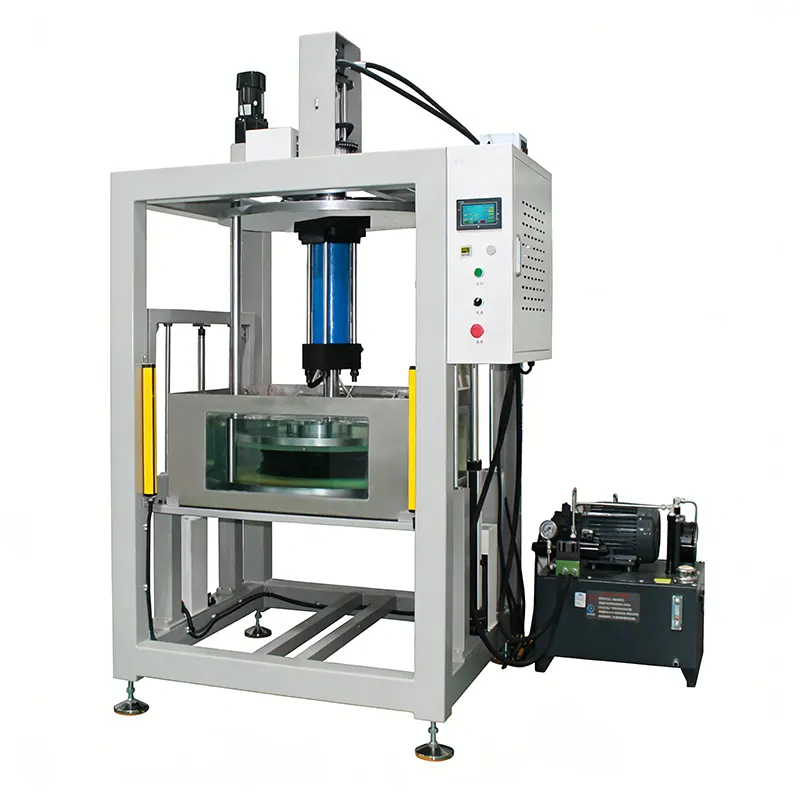
The Bicycle Wheel Hub Air Tightness Tester from Derui Testing is specifically designed for bicycle hub applications, with configurable test pressures from 0.05 to 0.8 MPa and a resolution of 0.01 Pa. It features automatic fixture recognition for different hub types (front, rear, through-axle, quick-release), temperature compensation via dual-sensor architecture, and integrated data logging for SPC (Statistical Process Control) analysis.
Setting Up a Hub Leak Detection Protocol
Establishing an effective leak detection protocol requires more than simply purchasing a tester and running parts through it. A well-designed protocol addresses fixture design, test parameter optimization, calibration procedures, and statistical sampling plans.
Fixture Design Considerations
The test fixture must seal the hub’s axle bore and any spoke holes to create a closed test volume. For front hubs, this typically involves sealing both axle ends with O-ring sealed plugs. For rear hubs, the freehub body must also be sealed, which adds complexity because the freehub pawls and springs create small internal volumes that can affect pressure measurements. The fixture must accommodate these variations without introducing false leak paths at the fixture-to-hub interface.
Quick-change fixture systems are essential for manufacturers producing multiple hub types. The fixture should include a positive mechanical lock that prevents the hub from being loaded in the wrong orientation, and the tester should automatically recognize the fixture type and load the appropriate test recipe. This eliminates operator error and ensures consistent test conditions across different product configurations.
Calibration and Master Leak Standards
Regular calibration using certified leak standards is essential for maintaining measurement accuracy. A master leak standard is a calibrated orifice that produces a known leak rate at a specified test pressure. By testing the master leak standard at regular intervals (typically every 4-8 hours of production), the tester’s measurement system can be verified and adjusted if necessary.
Most manufacturers maintain three master standards: a “zero leak” standard (a solid block with no leak path) for verifying the tester’s baseline stability, a “pass” standard (a leak rate just below the accept threshold) for verifying the pass decision, and a “fail” standard (a leak rate just above the reject threshold) for verifying the fail decision. This three-point verification ensures that the tester correctly classifies hubs near the pass/fail boundary, where measurement uncertainty is most critical.
Common Failure Modes and Root Causes
Understanding the most common hub seal failure modes helps manufacturers target their quality improvement efforts and interpret leak test results more effectively.
- Seal lip damage: The most frequent cause of hub leaks, accounting for approximately 40% of all failures. Damage can occur during assembly (improper press-fit tools), during bearing installation (excessive force transmitted through the seal), or from contamination during storage (nicks from handling). The leak signature is typically a moderate leak rate (0.5-2.0 Pa/s) that is consistent across multiple test cycles.
- Dust cap interface gaps: Representing about 25% of failures, gaps between the dust cap and hub shell allow water to bypass the main seal. This is often caused by dimensional variation in the dust cap press-fit diameter or by insufficient press-fit interference. The leak signature is typically a small but consistent leak rate (0.2-0.8 Pa/s) that may vary with hub rotational position.
- Hub shell porosity: Casting or forging defects in the hub shell can create microscopic porosity paths that allow air and water to pass through the shell wall. This accounts for approximately 15% of failures and is characterized by a very small, stable leak rate (0.1-0.3 Pa/s) that is not affected by seal condition or rotational position.
- Axle-to-seal clearance: Excessive clearance between the axle surface and the seal inner lip, typically caused by axle undersizing or seal bore oversizing, accounts for about 12% of failures. The leak rate varies with axle rotational position and increases significantly when the axle is deflected sideways, simulating real-world loading conditions.
- Bearing cup migration: In hubs where the bearing cups are press-fit into the shell, the cups can gradually migrate outward under load, creating a gap between the cup outer diameter and the shell bore. This accounts for approximately 8% of failures and typically manifests as a leak that develops after the hub has been in service for some time rather than being detectable at initial production testing.
Pro Tip: When a hub fails leak testing, always perform a bubble test to locate the leak before disassembling the hub. Disassembly often destroys the evidence of the leak path, making root cause determination impossible. Document the leak location, rate, and hub serial number for SPC trending analysis.
FAQ: Bicycle Hub Leak Detection
Q1: What is the minimum leak rate that indicates a failed bicycle hub?
For standard bicycle hubs tested at 0.2 MPa, the typical reject threshold is 0.5 Pa/s. For e-bike hubs, the threshold is tightened to 0.2 Pa/s due to higher operating speeds and temperatures. These thresholds are set well below the leak rate that would allow liquid water ingress under normal riding conditions, providing a safety margin for long-term seal degradation.
Q2: Can pressure decay testing detect leaks in sealed cartridge bearing hubs?
Yes, but the test approach differs. Cartridge bearing hubs have the bearings pre-sealed at the factory, so the test volume is the space between the cartridge bearing outer race and the hub shell bore. This is a very small volume, which actually improves sensitivity because a given leak rate produces a larger pressure change in a smaller volume. However, the fixture must seal against the cartridge bearing outer race rather than the axle, which requires different fixture designs.
Q3: How often should leak test equipment be calibrated?
Production leak testers should be verified with master leak standards every 4-8 hours of operation, or at the start of each shift, whichever is more frequent. Full calibration against traceable reference standards should be performed annually or whenever the tester is moved to a different location. Temperature sensors should be verified quarterly using a calibrated reference thermometer.
Q4: What test pressure should I use for bicycle hub leak testing?
The standard test pressure is 0.2 MPa (2 bar) for most bicycle hubs. This provides adequate sensitivity without risking seal damage. For hubs with particularly robust seals (such as those designed for submersible e-bike motors), test pressures up to 0.5 MPa may be used. Always verify that the test pressure does not exceed the seal manufacturer’s maximum rated pressure for the specific seal design being used.
Q5: Is helium leak testing necessary for bicycle hubs?
For most production applications, pressure decay testing provides sufficient sensitivity. Helium leak testing is recommended for R&D validation of new seal designs, certification testing of premium hubs with ceramic bearings, and root cause analysis of field failures where the leak rate is below the detection limit of pressure decay equipment. The cost and cycle time of helium testing make it impractical for routine production screening.
Q6: How do I handle hubs with multiple seal locations?
Hubs with multiple seal locations (e.g., both sides of the hub, plus a freehub seal) can be tested as a complete assembly using pressure decay, but this approach cannot identify which specific seal is leaking. For diagnostic purposes, use bubble testing or helium sniffer probing to isolate the leak location. Some advanced testers support sequential testing of individual seal zones using multi-port fixtures with independent pressure channels.
Q7: What is the effect of temperature on leak test results?
Temperature changes directly affect pressure measurements in a sealed volume. A 1°C increase causes approximately 0.34% pressure increase at 0.2 MPa, which can mask a real leak or create a false leak indication. Modern testers compensate for this using reference volume comparison or temperature sensor inputs. For the most accurate results, maintain the test environment at a constant temperature (±2°C) and allow hubs to equilibrate to ambient temperature before testing.
Q8: Can I test hubs after they are laced into wheels?
Testing hubs after wheel building is possible but significantly more challenging. The spoke nipples create additional seal points that must be addressed, and the spoke tension can distort the hub shell enough to affect seal performance. Most manufacturers test hubs as bare components before wheel building, which provides better sensitivity and easier defect identification. If post-lacing testing is required, use a fixture that seals the spoke nipple holes and accounts for the additional test volume introduced by the spoke bed cavity.
Q9: What sampling rate should I use for production leak testing?
For safety-critical components like bicycle hubs, 100% testing is strongly recommended. The cost of a single hub leak test (approximately $0.10-0.30 per hub for pressure decay) is negligible compared to the warranty and liability costs of a field failure. If 100% testing is not feasible, ISO 2859-1 sampling plans with AQL 0.65 or tighter should be applied, with the understanding that any reject in the sample triggers 100% screening of the lot.
Q10: How do I integrate leak testing into an automated production line?
Automated integration requires a leak tester with PLC communication capability (typically via Ethernet/IP, Profinet, or Modbus TCP), automatic part loading and unloading via robotic or pneumatic handling, and barcode/RFID tracking for individual hub traceability. The tester should be positioned after bearing installation and before final assembly, with a reject chute that diverts failed hubs before they enter downstream operations. Cycle time must be synchronized with the line takt time, which may require parallel test stations for high-speed lines.
Related Products
Need Professional Bicycle Equipment?
Explore our range of testing machines designed for compliance with international standards.