Derui chamber
📋 Table of Contents
EN 17128 Explained – Full Guide to E-Scooter Testing Requirements
Before you invest in testing, you must determine if EN 17128 is the correct compliance pathway for your product. This guide explains the scope, vehicle classification, testing requirements, and CE marking process for Personal Light Electric Vehicles (PLEV) — helping manufacturers navigate EU compliance without costly missteps.
⚡ Key Takeaway
EN 17128 applies to all personal light electric vehicles with a maximum design speed of 25 km/h (15.5 mph). If your vehicle exceeds this speed, it falls under L-category type approval (Regulation EU 168/2013) — a much more expensive certification process. Getting this right early saves significant time and money.
- Defining the Scope – Does Your Vehicle Fall Under EN 17128?
- Vehicle Classification under EN 17128
- Core Mechanical Testing Requirements for EN 17128
- EN 17128 Explained: Electrical Safety and Battery Management
Defining the Scope – Does Your Vehicle Fall Under EN 17128?
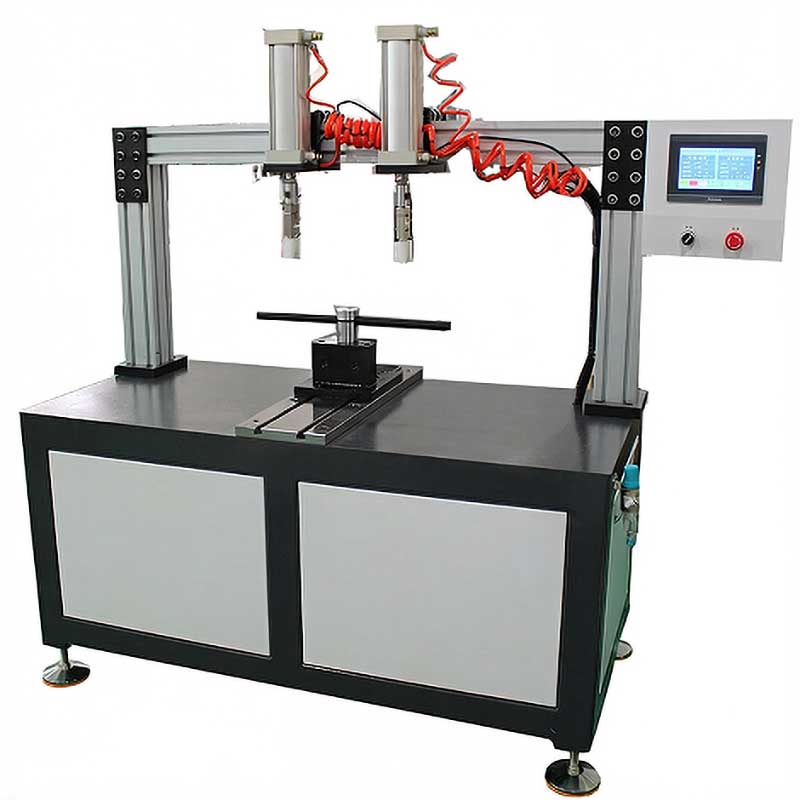
E-Scooter Handlebar Fatigue Test Machine for EN 17128 Compliance
Identifying Personal Light Electric Vehicles (PLEV)
The standard defines a PLEV as a wheeled vehicle, totally or partially motorized, with an on-board power source. To qualify under EN 17128, your vehicle must meet these specific criteria:
- Intended Use: Designed for personal transport on public spaces or private paths.
- Position: Can be used in a standing or seated position (depending on the class).
- Power Source: Must utilize an electric motor.
The 25 km/h Threshold
Speed is the primary factor in regulatory classification. EN 17128 only applies to vehicles with a maximum design speed of 25 km/h (15.5 mph).
- Below 25 km/h: The vehicle is typically governed by the Machinery Directive 2006/42/EC and EN 17128.
- Above 25 km/h: The vehicle likely falls under L-category type approval (Regulation (EU) No 168/2013), which involves a much more rigorous and expensive certification process.
Exclusions at a Glance: Competition, Medical, and Toys
Not everything with an electric motor is a PLEV. To avoid wasting resources on the wrong testing protocols, verify that your product does not fall into these excluded categories:
By narrowing your scope early, you ensure your CE Marking process remains streamlined and legally defensible.
Vehicle Classification under EN 17128
To get your product on the market, you first need to know exactly where it fits. EN 17128 breaks down Personal Light Electric Vehicles (PLEV) into four distinct classes. This classification isn’t just paperwork — it dictates which safety tests apply to your specific design.
Class 1: Non-Self-Balancing Personal Mobility
This is the most common category for the global market. It covers standard electric scooters that rely on the rider to keep them upright. These vehicles feature a handlebar and a deck but do not use self-balancing technology.
Class 2: Self-Balancing without a Seat
Think of hoverboards or unicycles. These vehicles use internal gyroscopes to maintain balance. To fall under Class 2, the vehicle must be operated without a seat and rely entirely on the rider’s center of gravity for control.
Class 3 & 4: Seated Vehicles and Control Interfaces
The main difference here is the addition of a seat and how the vehicle stays upright:
- Class 3: Vehicles with a seat that are not self-balancing. These often resemble small electric mopeds but are capped at 25 km/h.
- Class 4: Seated vehicles that utilize self-balancing technology. These are less common but require rigorous stability testing due to the complex interaction between the seat and the balancing sensors.
Comparison Table: Lighting and Signal Requirements by Class
We’ve simplified the visibility requirements below to help you see what’s mandatory for CE marking and market access.
Each class has its own hurdles. Whether you are dealing with structural fatigue testing for a Class 1 scooter or sensor validation for a Class 4, hitting these marks is the only way to ensure your product is legally cleared for the streets.
Core Mechanical Testing Requirements for EN 17128
When we talk about EN 17128, the mechanical side is where the “real world” meets the lab. We don’t just look at whether an e-scooter moves; we look at whether it stays together after thousands of miles of vibration and stress.
Structural Integrity & Fatigue Testing
The frame is the backbone of the ride. To meet structural fatigue testing standards, we subject the chassis to repeated load cycles. This mimics years of riding over bumps and potholes. If the frame cracks or deforms, it fails. We ensure the materials can handle the constant tension without “metal fatigue.”
Mandatory Locking Systems
The folding mechanism is a common point of failure in cheap models. Under EN 17128, a mandatory locking system is non-negotiable.
- Dual-Action Locks: Most designs require two separate actions to fold the scooter, preventing accidental collapse while riding.
- Static Load: The mechanism is tested against extreme force to ensure it won’t snap under sudden impact.
Handlebar & Steering Load Tests
Steering must be precise and rugged. We apply heavy vertical and horizontal loads to the handlebars to simulate a rider leaning hard or pulling back during an emergency stop. Control interface stability ensures that the steering column remains rigid and responsive, even under high pressure.
Surface Temperature Safety
Nobody should get burned by their own scooter. We measure the thermal safety of all reachable parts. If a motor or battery casing gets too hot during heavy use, it must be shielded.
Summary of Mechanical Requirements
By sticking to these mechanical testing rigors, we ensure every ride isn’t just fast, but fundamentally solid. Our goal is to eliminate “vibration failure” and ensure the hardware lasts as long as the electronics.
Electrical Safety and Battery Management
Electrical integrity is where we draw the line between a reliable ride and a major safety hazard. To meet the EN 17128 Explained – Full Guide to E-Scooter Testing Requirements, the electrical architecture must be built to handle more than just a sunny day at the park; it needs to be resilient against internal failures and external elements.
BMS Integrity & Thermal Runaway Prevention
The Lithium-ion Battery Safety standards under EN 17128 are rigorous. We ensure the Battery Management System (BMS) is smart enough to intervene before things go south.
- Thermal Runaway Prevention: The system must detect and mitigate overcharge, over-discharge, and overheating.
- Cell Balancing: Maintaining uniform voltage across all cells to prevent premature degradation or failure.
Ingress Protection (IP Rating): Moisture and Dust
An e-scooter is a vehicle, not a toy, and it needs to survive the occasional puddle or dusty trail. Ingress Protection (IP) ratings are a mandatory part of the testing process.
- Water Resistance: Critical components like the motor controller and battery pack must meet specific IP ratings (typically IPX4 or higher) to prevent short circuits during rain.
- Dust Defense: Ensuring that fine particles don’t interfere with the internal circuitry or mechanical moving parts.
Charging Protection and Electrical Insulation
Safety doesn’t stop when the scooter is plugged into the wall. We focus on two specific areas to protect both the user and the hardware:
- Drive-Away Protection: The software must electronically lock the motor while the charger is connected. This prevents the scooter from moving and ripping the charging port or causing a fall.
- High-Voltage Insulation: We verify that all electrical paths are properly insulated. This ensures that the metal frame of the scooter never becomes “live,” protecting the rider from accidental electric shocks.
By sticking to these functional safety protocols, we ensure the electrical system is as robust as the frame it’s built into.
Dynamic Performance Requirements
When we look at how a scooter handles on the road, EN 17128 sets strict rules to ensure the ride is predictable and safe. It’s not just about how fast the motor goes; it is about how the vehicle behaves during acceleration, braking, and interaction with others in a busy urban environment.
Braking Systems and Stability
Stopping power is the most critical safety feature. We ensure every vehicle meets the braking performance standards by testing for both effectiveness and stability. The scooter must be able to stop within a specific distance without the rider losing balance or the wheels locking up dangerously.
Acceleration Limits and Anti-Tampering Measures
To prevent the vehicle from “looping” or throwing the rider backward, the acceleration limit is capped at 2 m/s². This ensures a smooth start, which is vital for functional safety in crowded areas.
We also prioritize anti-tampering measures. Manufacturers must design the scooter’s firmware and hardware to prevent “speed hacking.” Overriding the 25 km/h limit is a major compliance failure, so we use encrypted controllers to block unauthorized speed increases and maintain the vehicle’s legal status.
Acoustics and Warning Devices
Electric scooters are incredibly quiet, which poses a risk to pedestrians. EN 17128 mandates that every unit is equipped with a reliable acoustic warning device — usually a bell or an electronic horn.
- Audibility: The device must be loud enough to be heard over standard city background noise.
- Ergonomics: The rider must be able to trigger the warning without moving their hand from the grip or losing control of the steering.
- Durability: The device must remain functional after exposure to vibration and moisture (IP rating consistency).
CE Marking and Market Entry
Getting your e-scooter onto the European market requires more than just a good design; it requires a legal “green light.” Following the EN 17128 Explained – Full Guide to E-Scooter Testing Requirements means ensuring your documentation is as solid as your hardware.
The Technical Construction File (TCF)
Think of the Technical Construction File as the biography of your product. It’s a comprehensive folder containing every design drawing, circuit diagram, and test report proving compliance.
- Mandatory Storage: You must keep this file accessible for 10 years after the last unit is placed on the market.
- Proof of Safety: It serves as your primary defense if authorities ever question your vehicle’s safety.
Declaration of Conformity (DoC)
The Declaration of Conformity is your legal passport. By signing this document, you take full responsibility for the product’s compliance with the Machinery Directive 2006/42/EC and EN 17128. Without a valid DoC, your e-scooter cannot legally carry the CE Marking or enter the EU trade zone.
The Role of Testing Partners
We don’t recommend “guessing” your way through compliance. Working with a professional lab streamlines the Micromobility Market Access journey.
- Gap Analysis: Partners identify safety weaknesses early in the prototype stage.
- Standardized Testing: They provide the accredited reports needed for your Technical Construction File.
Market Entry Documentation Checklist
Securing your CE Marking Process through these steps ensures your brand remains reliable and compliant in the global marketplace.
Common EN 17128 Questions (FAQ)
Is EN 17128 mandatory for all e-scooters?
Strictly speaking, it is a harmonized standard. While you can technically use other methods to prove safety, EN 17128 is the “gold standard” recognized by authorities. If you want to achieve CE Marking under the Machinery Directive 2006/42/EC, following this standard is the most direct and legally secure path for Personal Light Electric Vehicles (PLEV).
What happens if my e-scooter exceeds 25 km/h?
If your vehicle’s design speed is over 25 km/h, it immediately exits the PLEV category. It then falls under Regulation (EU) No 168/2013 for L-category vehicles (like mopeds). This requires a much more complex and expensive “Type Approval” process. To stay within the simpler EN 17128 framework, you must hardware-limit or software-lock the top speed.
Does EN 17128 cover rental fleets?
Yes, the standard applies to both private and commercial-use scooters. However, keep in mind that:
- Rental scooters often face additional “heavy-duty” requirements from local city councils.
- The Structural Fatigue Testing in EN 17128 is the bare minimum; for rental fleets, I always recommend higher durability thresholds to handle public wear and tear.
How long does the testing process take?
Generally, you should budget 4 to 8 weeks. This timeline depends on:
- Lab availability.
- Structural testing duration: Frame stress tests take time to run through thousands of cycles.
- Battery safety checks: Evaluating Lithium-ion Battery Safety and Thermal Runaway Prevention cannot be rushed.
Can I self-certify under EN 17128?
As a manufacturer, you are responsible for the Declaration of Conformity (DoC). While you can technically “self-declare,” you must have a complete Technical Construction File that proves the vehicle passed every test. Without a report from a qualified testing partner, your DoC holds very little weight if an EU customs officer or market surveillance authority asks for proof of Functional Safety.
Conclusion
EN 17128 is the essential compliance standard for all personal light electric vehicles (PLEVs) with a maximum speed of 25 km/h. From vehicle classification and mechanical testing to electrical safety and CE marking documentation, every requirement exists to protect riders and ensure product reliability.
Investing in proper testing equipment and working with accredited labs ensures your e-scooter meets all EN 17128 requirements — giving you legal market access and protecting your brand from costly compliance failures.
Need EN 17128 Testing Equipment or Lab Services?
DeRui Tester provides complete EN 17128 compliance testing solutions — including structural fatigue testers, electrical safety test benches, and CNAS-accredited lab services with certified reports for CE marking.
🔗 Related Products
🔗 Related Products
📚 Related Articles
Related Sources
RSA Ireland – E-Scooter Guidance
TRL Research – E-Scooter Construction Standards
Need Professional E-Scooter Testing Equipment?
Explore our range of testing machines designed for compliance with international standards.