Derui chamber
EN 15194 EPAC Test Equipment Checklist for E-Bike Labs
Turn an EPAC test plan into a practical equipment scope. Separate complete-bike assistance checks, structural methods, electrical work and production-line inspection before requesting a quotation.
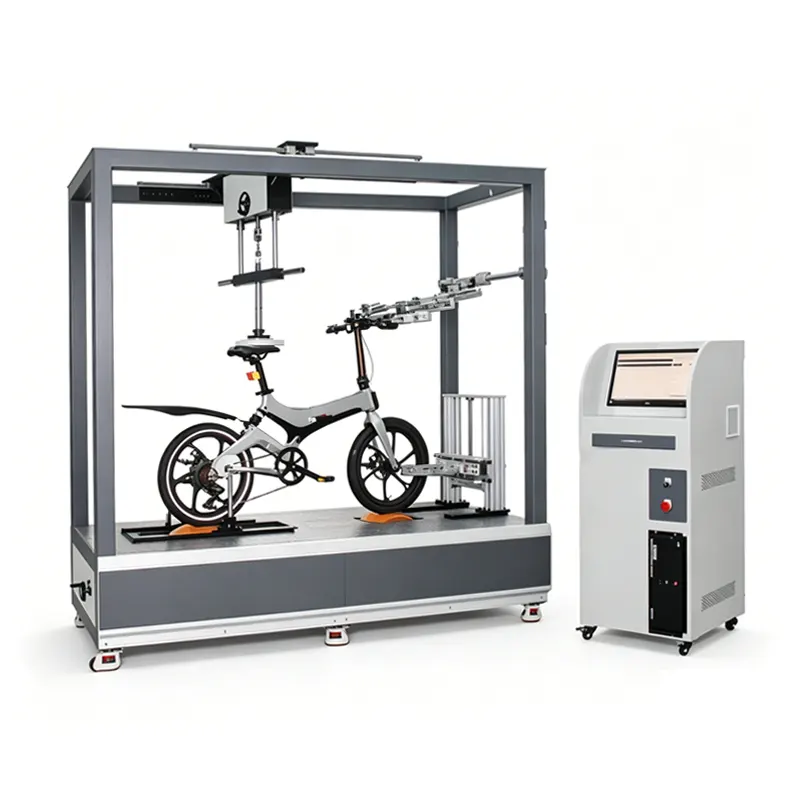
Start with the applicable EN 15194 edition and the exact tests your project must perform. Then map every method to its specimen, fixture, controlled variable, measurement and evidence. Do not buy one broadly described “EN 15194 machine” on the assumption that it performs all EPAC checks.
EN 15194 concerns electrically power assisted cycles (EPACs), including power-management and electrical aspects. An e-bike programme can also involve bicycle mechanical methods, project-specific durability work and end-of-line (EOL) checks. Those are related activities, but they do not automatically share a test procedure or equipment platform. The first purchasing decision is therefore how to divide the work into stations.
This guide is for laboratory managers, product engineers and procurement teams. It is an equipment-planning framework, not a reproduction of licensed standard clauses or a conformity assessment. Confirm the applicable national adoption, amendment, target market and controlled method with your compliance owner before finalizing numeric settings or acceptance criteria.
1. Establish the EPAC scope before naming a machine
BSI describes EN 15194 as covering EPAC bicycles with a maximum continuous rated motor power of 0.25 kW, where assistance is progressively reduced and finally cut off as the cycle reaches 25 km/h, or earlier when pedalling stops. That public scope description is useful for identifying a project; it is not a substitute for the purchased text of the standard or a market-specific legal review.
Write down the product classification, intended market, motor architecture, battery interface and exact edition of the applicable standard. Then list the test methods that the laboratory actually owns. Do not infer that all structural fatigue, battery, brake or EMC tests can be performed on one roller bench. If the project includes cargo, mountain or other special-use bicycles, have the compliance owner confirm any additional or different methods before specifying equipment.
2. Map the work into five equipment workstreams
The matrix below is a scoping tool, not a standards clause table. The actual method and acceptance criteria must be confirmed before a supplier claims coverage.
| Workstream | Decision to make | Potential equipment / evidence | Method boundary |
|---|---|---|---|
| Frame and fork | Which structural methods and specimen sizes apply? | Dedicated fatigue or impact stations; fixture drawing, load path, cycle and failure records | Confirm the applicable bicycle/EPAC method; a roller bench is not a frame-fatigue rig. |
| Motor assistance | How will assistance behavior be reproduced and measured? | Complete-vehicle roller or dynamometer arrangement; synchronized speed, cadence and electrical data where required | Specify the controlled EN 15194 procedure and permissible test setup. |
| Brakes | What braking and any control-interaction checks are in scope? | Brake test station or validated complete-vehicle setup; force, speed, distance or signal evidence as applicable | Do not assume every EPAC has a brake-lever motor cut-off or one universal endurance count. |
| Electrical system | Which circuit, charging, environmental or EMC checks are assigned to this lab? | Method-specific instruments or specialist laboratory; traceable measurements and test reports | Separate battery-product standards and other regulatory tests from EN 15194 scope. |
| Production EOL | Which fast checks screen assembled bicycles? | Recipe-driven station; serial number, measured values, faults and pass/fail record | EOL quality control does not replace type testing or certification. |
3. Specify assistance testing around the measured decision
For a complete-bicycle assistance test, identify the motor type, wheel and tyre sizes, gearing, cadence input, operating modes and battery state. Define how the fixture holds the bicycle without changing its normal operation. State whether speed, wheel torque, cadence, voltage, current or controller signals must be observed, and which channels must be time-synchronized. A large roller or motor rating alone says little about the useful measurement range.
The test plan should describe how pedalling starts and stops, how the vehicle approaches the relevant speed, and how assistance behavior is recorded. Use the procedure and tolerances from the controlled method, not a number copied from another article. Ask suppliers to demonstrate an example raw trace and an intelligible report. Derui’s two-in-one electric bicycle and scooter test bench is a product to evaluate for compatible complete-vehicle performance applications; confirm the exact configuration and method coverage with engineering before treating it as an EN 15194 solution.
4. Keep frame, fork and brake methods separate
Structural testing begins with the required specimen and boundary conditions, not with a generic “higher e-bike load” assumption. ISO describes ISO 4210-6:2023 as a set of frame and fork test methods for ISO 4210-2. Whether and how a particular method applies to your EPAC programme must be determined from the relevant controlled documents. For each method, identify mounting datums, load direction, normal operating range, motion, stop condition and evidence to retain.
Braking work has different fixtures and measured outcomes. A method may examine complete-bicycle braking performance, a component or a control interaction; these should not be conflated. If a brake input is expected to affect motor assistance in a particular design, document the design behavior and applicable test method rather than assuming a universal lever-switch requirement. For choosing stations across these different applications, see our bicycle test bench selection guide.
5. Give electrical work its own evidence plan
BSI’s public overview identifies engine power management, electrical circuits and charging-system aspects within EN 15194. Translate the applicable method into the instruments, operating state, measurement range, safety provisions and records needed by the responsible laboratory. A roller bench may provide electrical channels for drive-system observation, but it is not automatically a substitute for electrical safety, EMC or battery-specific facilities.
List each electrical check separately and name the governing document. Confirm who supplies the power source or battery, what sample condition is needed, what fault or alarm is expected and how results are archived. If an independent laboratory performs an item, list it as an external test rather than adding an unsupported capability claim to the equipment RFQ.
6. Separate production EOL checks from qualification
EOL testing answers a narrower question: was this particular assembled bicycle built and connected as expected? The station may check the selected assistance mode, sensor communication, obvious faults and other manufacturer-defined release criteria. It should capture a serial number, recipe version, result and rework path while meeting the required takt time.
A short EOL sequence cannot reproduce a full laboratory method. Keep the qualification report and factory pass/fail record distinct, even if both use some of the same signals. Our e-bike and e-scooter EOL test-plan guide shows how to define the release decision without overstating what it proves.
7. Send an RFQ that makes station coverage testable
Give the supplier a method-by-method matrix. For each row include the document edition, specimen drawing, fixture points, target operating range, control mode, required sensors, data output, acceptance decision and intended station. Mark items as required, optional or outside scope. Ask the supplier to state exactly which rows a proposed station supports and which require separate equipment or external testing.
- Send representative EPAC drawings and the smallest-to-largest geometry range.
- Identify hub-drive or mid-drive variants and the intended battery and controller interfaces.
- Provide the controlled test methods or a permitted summary; avoid guessing test values.
- Request fixture concepts, useful sensor ranges, sample data and report formats.
- Define safety, utilities, calibration evidence, FAT specimens and site acceptance.
- Ask for exclusions and assumptions beside each quoted capability.
At factory acceptance, witness representative operation for the quoted methods and verify the agreed data and safety functions. Do not accept a generic “EN 15194 compliant” label as proof of complete programme coverage. A good proposal explains what one station does, where another station is needed and which decisions remain with the compliance owner.
Planning an EPAC test laboratory or production station?
Send Derui your product drawings, applicable method list and required measurement evidence. We can review which tests need a complete-vehicle bench, which need dedicated component stations and what belongs in a separate electrical or EOL workflow.
This guide uses publicly available scope information only. Confirm the applicable edition, national adoption, detailed clauses, numeric test settings and conformity route from the controlled documents for your project. A machine proposal is not a certification decision.